

Yes
I do.
No
I don’t.
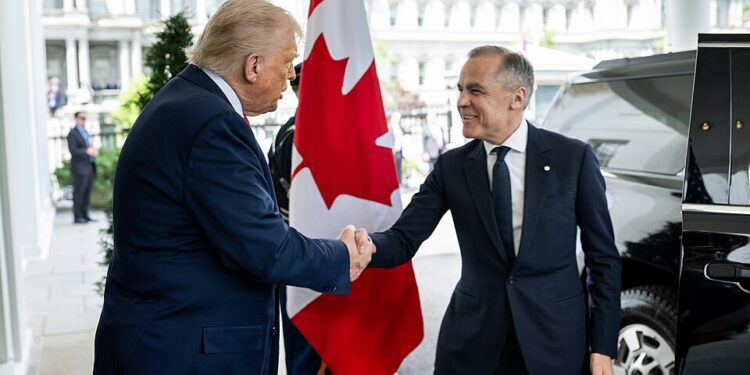
President Donald Trump is once again putting America’s relationship with Canada under the microscope as tensions between Washington and Ottawa continue to rise.
The latest dispute comes amid a major trade confrontation between the two longtime neighbors. The United States recently imposed 50% tariffs on roughly $20 billion worth of Canadian products, while Canada has promised a dollar-for-dollar response beginning in September.
Trump has repeatedly argued that the United States has been too generous toward Canada and that the economic relationship needs to become more favorable to American workers, businesses and taxpayers.
The president has also made increasingly sharp comments about Canadian leadership. In July, Trump called Canada’s leadership “nasty,” while making a point of distinguishing the Canadian government from ordinary Canadians, whom he said he likes.
For Trump supporters, the dispute fits into his broader “America First” philosophy. They argue that a close ally should still be expected to negotiate trade agreements that benefit the United States and that Washington should be willing to use tariffs and other economic tools when Trump believes American interests are being ignored.
Critics see things differently. They warn that escalating a trade dispute with one of America’s closest neighbors could increase costs for businesses and consumers while damaging a relationship that has long been important for trade, energy and security.
Canada, meanwhile, is showing no indication that it intends to simply accept Washington’s demands. Prime Minister Mark Carney’s government has promised retaliation and suspended trade negotiations after the latest American tariffs took effect.
That means Americans could be watching this confrontation for some time.
Trump has built much of his political career around challenging longstanding arrangements that he believes put the United States at a disadvantage. His approach toward Canada appears to follow that same strategy: apply pressure, demand concessions and insist that America receive a better deal.
But is the president right to take such a hard line against America’s northern neighbor?