
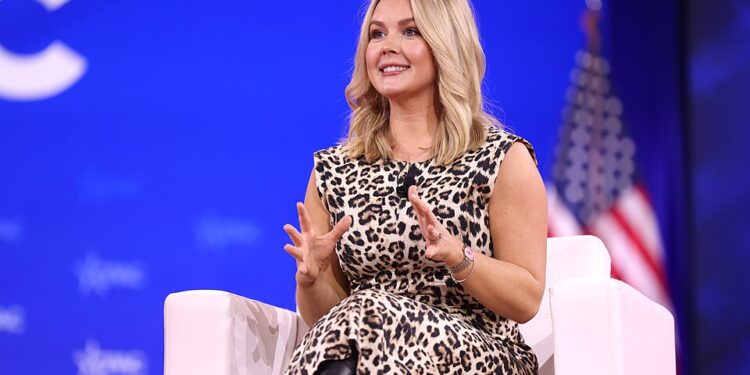
Former White House Press Secretary Karoline Leavitt says some journalists privately apologized to her after asking questions they acknowledged had been pushed by newsroom bosses.
The revelation offers a rare behind-the-scenes look at the often-tense relationship between President Donald Trump’s White House and members of the national press corps.
During an appearance on Sean Hannity’s Hang Out with Sean Hannity, Leavitt described what she called a “performative aspect” of White House press briefings.
According to Leavitt, reporters sometimes approached her afterward and said they were sorry for questions they had been instructed to ask.
“There’s been times reporters have even said to me, ‘I’m sorry, I had to ask that today. You know, my bosses really wanted me to ask that,’” Leavitt said.
Leavitt argued that some reporters privately recognized certain questions as unfair but nevertheless faced pressure from editors and executives at their news organizations.
Her account immediately adds another dimension to the long-running debate over media fairness, political journalism and the relationship between the Trump administration and major news outlets.
Leavitt Describes Pressure Inside Newsrooms
Leavitt told Hannity that individual journalists do not always have complete control over the subjects they pursue.
She suggested that decisions made by editors and corporate executives can influence the questions reporters bring into the White House briefing room.
The former press secretary did not publicly identify the reporters who allegedly apologized to her. As a result, the private conversations she described have not been independently confirmed by the journalists involved.
Still, her comments provide insight into how Leavitt says the briefing-room dynamic operated during her tenure.
Major news organizations have editorial structures in which reporters, editors and newsroom managers routinely collaborate on coverage decisions. The extent to which those decisions influenced the specific exchanges Leavitt described remains unclear.
Leavitt Says She Has Seen Changes at CBS
Leavitt also singled out CBS while discussing the state of American political journalism.
She said she believed there had been “a lot of improvement” at the network and emphasized that the Trump team was not demanding favorable coverage.
Instead, she said the administration wanted reporting based on “fairness, truth” and “accuracy.”
Leavitt argued that routine presidential actions, including the signing of executive orders, should receive straightforward factual coverage regardless of how journalists personally view the administration.
Her comments come as questions surrounding political bias, newsroom independence and public trust continue to shape the national media landscape.
Trump and the Media Have Long Clashed
Trump has frequently criticized major news organizations over coverage he considers inaccurate or unfair.
Those disputes have remained prominent during his second administration. In September 2026, Trump barred CNN, MS NOW and Politico journalists from White House access, accusing the organizations of publishing “fake news.” The affected outlets challenged the move, while legal experts raised First Amendment and due-process questions.
That broader conflict provides important context for Leavitt’s latest comments.
For years, Trump and his allies have argued that some traditional news organizations approach his presidency with an ideological bias. News organizations and press-freedom advocates, meanwhile, have maintained that aggressive questioning of government officials is a central part of journalists’ watchdog role.
Leavitt’s claims do not settle that debate, but they provide her account of what happened away from the television cameras.
Leavitt Left the White House in August
Trump announced in August that Leavitt would leave her position as White House press secretary to spend more time with her family.
She completed her tenure on August 27 and transitioned into a role as an outside adviser to Trump. She was 28 and had been the youngest person ever to serve as White House press secretary.
Trump praised Leavitt when announcing her departure, calling her one of his most trusted aides and saying she had done a strong job representing his administration.
Her departure did not end her involvement in Republican politics or her public commentary about the media.
A Revealing Look Behind the Briefing-Room Cameras
Leavitt’s latest remarks are likely to draw attention because they focus on something the public rarely sees: private conversations between government officials and journalists after contentious White House briefings.
Her account suggests that, at least in the conversations she described, some reporters may have viewed questions differently from the editors who assigned them.
Because Leavitt did not name the journalists involved, however, readers have no independent confirmation of what was said during those private exchanges.
That distinction is important.
What is publicly documented is that Leavitt made the claim during her interview with Hannity and argued that newsroom executives sometimes exert substantial influence over White House coverage.
The episode arrives during an especially contentious period between the Trump administration and several national media organizations.
Whatever Americans think about Trump, Leavitt or the national press, the dispute highlights a larger question that has followed political journalism for years: who ultimately determines which stories and questions receive the most attention — reporters themselves, their editors or the organizations employing them?
For news consumers concerned about accuracy and accountability, that question is likely to remain part of the national conversation.