

Yes
He should.
No
He shouldn’t.
Artificial intelligence is advancing at a remarkable pace, bringing promises of major breakthroughs while also raising questions about how powerful the technology could eventually become. Now, Microsoft co-founder Bill Gates is sounding an unusually serious warning about what could happen if advanced AI falls into the wrong hands.
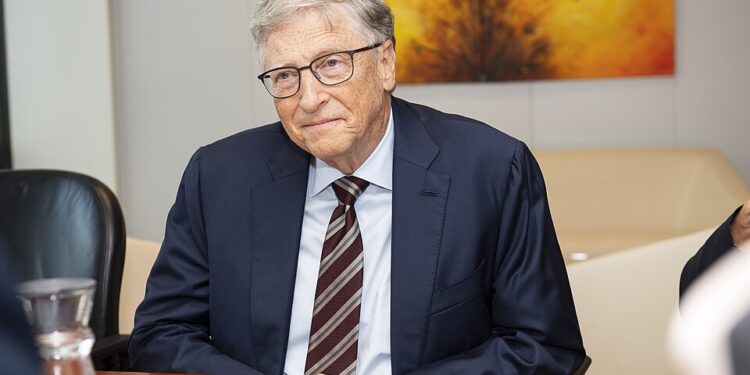
In an interview with NBC’s Meet the Press, Gates said artificial intelligence could become powerful enough to help drive events that result in “a billion deaths.” His concern centers particularly on the combination of increasingly sophisticated AI tools and people who intend to use those tools for harmful purposes. Gates also argued that relying entirely on technology companies to police themselves may not be sufficient, saying government officials, lawmakers and law enforcement should participate in developing appropriate safeguards.
The warning comes as President Donald Trump’s administration, Congress and technology companies face a difficult balancing act. Artificial intelligence could potentially transform medicine, manufacturing, national defense, education and countless other parts of American life. At the same time, policymakers are considering risks involving cybersecurity, biological threats, misinformation and the possibility that increasingly capable AI systems could be misused.
Gates has not argued that AI should simply be abandoned. In fact, he has repeatedly discussed its potential benefits. Reuters recently reported that Gates sees enormous possibilities for AI in areas including healthcare, education and agriculture while simultaneously warning that governments are not adequately prepared for some of the technology’s consequences.
That leaves Americans with an important policy debate. Heavy federal restrictions could potentially slow innovation and make it more difficult for American companies to compete internationally. Too little oversight, however, could leave the country unprepared for risks that technology leaders themselves increasingly acknowledge.
Ultimately, the question is not simply whether AI is good or bad. It is how Washington should respond to a technology developing faster than many existing laws and institutions.