
President Donald Trump has received an encouraging prediction from one of the most powerful Republicans in Washington as the party prepares for a critical election that could determine the future of his administration’s agenda.
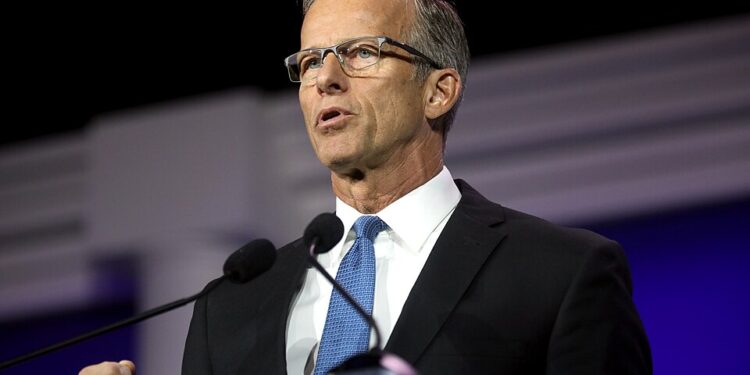
Senate Majority Leader John Thune believes Republicans are positioned to outperform expectations in the November 3 midterm elections, potentially preserving their control of the U.S. Senate despite increasingly competitive races across the country.
The South Dakota Republican expressed confidence that political polling is failing to capture the full strength of Republican support, suggesting the GOP could deliver a stronger Election Day performance than many analysts anticipate.
His prediction comes as Republican leaders work to defend their narrow Senate majority while making difficult decisions about where to spend millions of dollars in campaign funding.
Thune Predicts Strong Republican Performance
Speaking with Fox News Digital while campaigning in Nebraska, Thune offered an optimistic assessment of the GOP’s chances in the upcoming elections.
Republicans currently hold 53 Senate seats, giving them a majority over the 47 seats controlled by Democrats and independents who caucus with them.
However, multiple competitive races have raised concerns about whether Republicans can maintain that advantage.
Thune acknowledged that several contests remain close but argued that traditional polling may underestimate the number of Republican voters who ultimately participate.
He suggested that previous elections have demonstrated the difficulty of accurately measuring Republican support, particularly among voters who do not consistently respond to political surveys.
The Senate majority leader made clear that Republican candidates are continuing to compete aggressively, even in states where recent polling has favored Democrats.
His central prediction is that Republicans will outperform the polls when voters head to the ballot box on November 3.
For Trump, a successful Republican performance would help preserve an important advantage in Washington during the remaining two years of his presidency.
Republicans Make Major Campaign Spending Changes
Although Thune remains optimistic, Republican campaign organizations are adjusting their financial strategies as several important Senate races become increasingly competitive.
One of the most significant developments involves Georgia, where Republican Rep. Mike Collins is challenging Democratic Sen. Jon Ossoff.
The Senate Leadership Fund, a major Republican political action committee closely associated with Thune, initially committed $44 million to supporting Collins.
However, Ossoff’s fundraising strength and consistent polling advantages have complicated Republican efforts to capture the seat.
The organization has since redirected resources toward Kansas, where Republican Sen. Roger Marshall faces a surprisingly difficult reelection contest.
Kansas has traditionally been considered favorable territory for Republican Senate candidates, making the increasingly competitive race especially important for GOP leaders.
The decision highlights the difficult choices facing Republican strategists as they attempt to protect vulnerable incumbents while pursuing opportunities to defeat Democrats.
North Carolina Becomes Another Major Challenge
Republicans are also confronting uncertainty in North Carolina, where former Republican National Committee co-chair Michael Whatley is running against former Democratic Gov. Roy Cooper.
The candidates are competing for the Senate seat being vacated by Republican Sen. Thom Tillis.
Maintaining control of that seat is particularly important because a Democratic victory would reduce the GOP’s existing Senate advantage.
Republican-aligned organizations have scaled back planned spending in North Carolina, suggesting growing concerns about Whatley’s prospects.
Trump has continued supporting Whatley and recently appeared at a campaign rally on his behalf.
The president has also acknowledged concerns about the race while expressing confidence in Whatley’s qualifications.
Despite the financial adjustments, Thune has emphasized that Republicans are continuing to fight for competitive seats across the country.
Voter Turnout Could Deliver a Republican Surprise
One of the most important elements of Thune’s election strategy involves increasing participation among Americans who support Trump but do not regularly vote in congressional elections.
These occasional voters played an important role in previous Republican electoral successes.
However, encouraging them to participate when Trump himself is not on the ballot presents a different challenge.
Thune believes identifying and mobilizing these voters could make the difference in close Senate races.
Republican candidates are also attempting to appeal to independent voters and Americans who remain undecided.
Campaign organizations have invested substantial resources in voter outreach as they prepare for the final stretch before Election Day.
The strategy reflects Thune’s belief that polling numbers alone cannot determine the outcome of an election.
A stronger-than-expected Republican turnout could potentially change the results in several states where margins remain narrow.
Senate Control Could Shape Trump’s Final Two Years
The outcome of the midterm elections carries major consequences for Trump’s presidency.
If Republicans maintain their Senate majority, the president would retain an important advantage when seeking confirmation of federal judges and executive branch nominees.
Republican control could also improve the administration’s ability to advance legislative priorities, particularly if the party maintains its majority in the House of Representatives.
A Democratic Senate majority, however, would create significant obstacles for Trump.
Democrats would gain control over Senate committees, legislative scheduling, and the confirmation process, potentially limiting the administration’s ability to pursue important policy objectives.
With several Senate races remaining highly competitive, even a small shift in voter participation could influence which party controls the chamber in January 2027.
Thune Offers Trump Hope Ahead of Election Day
Despite challenging polling numbers and major changes in Republican campaign spending, Thune continues to believe his party can retain control of the Senate.
His confidence centers on the possibility that Republican enthusiasm and voter turnout will exceed current expectations.
Democrats, meanwhile, see opportunities to capture Republican-held seats and potentially change the balance of power in Washington.
Neither party can claim victory before ballots are counted, and the outcome of several competitive races remains uncertain.
Nevertheless, Thune’s prediction offers Trump an encouraging message at a crucial moment in the election cycle.
Republicans may face a difficult political environment, but their Senate leader believes the party can still surprise the experts and emerge from November’s elections with its majority intact.