
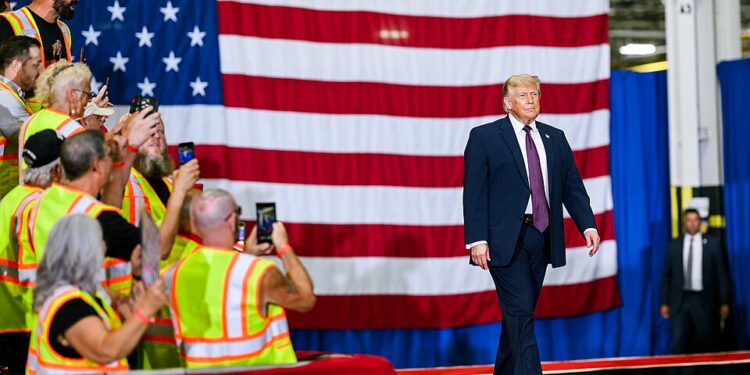
President Donald Trump is facing a growing challenge from within the Republican Party as a GOP congressman attempts to recruit additional lawmakers to oppose the administration’s military operations in Iran.
Rep. Thomas Massie of Kentucky is leading the latest effort to limit Trump’s military authority, raising the possibility of another congressional confrontation over the president’s foreign policy agenda.
The dispute comes at a particularly important moment for Republicans following the November midterm elections, which have changed the political landscape in Washington.
With Democrats preparing to take greater control of Congress, Massie believes some Republican lawmakers may become more willing to challenge the president.
The question now is whether his effort will attract enough support to make a meaningful difference.
Republican Congressman Challenges Trump’s Iran Policy
Massie is preparing another attempt to restrict President Trump’s ability to continue military operations against Iran without additional congressional authorization.
According to Fox News Digital, the Kentucky Republican believes another War Powers resolution could reach the House floor within the coming legislative days or sometime around Christmas.
If the measure moves forward, it would mark the fourth effort this year to place congressional restrictions on the president’s military actions in Iran.
Massie is urging fellow GOP lawmakers to rethink their backing of the Trump administration’s strategy, suggesting that Republicans now have an opportunity to distance themselves from the MAGA movement.
The statement reflects the increasingly visible disagreements between Massie and Republicans who continue to support Trump’s foreign policy decisions.
While the president’s supporters argue that military flexibility is necessary to protect American interests, Massie maintains that Congress must exercise its constitutional authority over military conflicts.
The Kentucky lawmaker believes the issue deserves another vote, even as uncertainty remains about whether additional Republicans will join his effort.
More Republicans Could Break With Trump
The prospect of additional Republican defections has drawn attention from lawmakers on both sides of the aisle.
House Armed Services Committee Chairman Mike Rogers of Alabama confirmed that Massie has been speaking with other Republicans about supporting another resolution.
However, Rogers made clear that he personally intends to oppose the legislation.
Rep. Jeff Van Drew of New Jersey also acknowledged that the number of Republican lawmakers willing to challenge Trump’s position could increase.
Van Drew suggested that one or two additional Republicans might join those who previously supported congressional restrictions on the Iran conflict.
Several GOP lawmakers have already demonstrated their willingness to break with the administration.
Reps. Tom Barrett of Michigan, Warren Davidson of Ohio, and Brian Fitzpatrick of Pennsylvania previously backed an Iran War Powers resolution.
Barrett has indicated that he would maintain his position if the next proposal closely resembles the earlier legislation.
However, he also expressed skepticism about whether a significantly larger group of Republicans would support the measure.
That uncertainty presents a major obstacle for Massie.
Although some Republicans have raised concerns about the administration’s military strategy, many others remain committed to supporting the president’s national security agenda.
Democrats Hope Midterm Results Weaken Trump’s Influence
Democratic lawmakers are closely watching the disagreement among Republicans, especially following the party’s gains in the 2026 midterms.
Some Democrats believe the election results could encourage Republicans to take more independent positions on controversial issues.
Rep. Ayanna Pressley of Massachusetts suggested that lawmakers should consider the views of their constituents when deciding whether to support additional restrictions on military operations.
Rep. Rosa DeLauro of Connecticut also expressed confidence that more Republicans could eventually join the effort.
Meanwhile, Democratic Rep. Adelita Grijalva of Arizona suggested that recent political shifts could make some Republican lawmakers feel less obligated to support President Trump’s positions.
Her comments reflected the belief that some Republicans may feel more comfortable challenging the president after the midterm elections.
This could be particularly relevant for lawmakers preparing to leave Congress or serve in the minority during the next legislative session.
For Democrats, securing even a handful of additional Republican votes could strengthen their efforts to challenge the administration.
However, there is still no clear evidence that enough Republicans are prepared to change their positions to guarantee passage of the proposed resolution.
Congress Faces Major Debate Over Presidential War Powers
The disagreement over Iran also raises broader questions about the constitutional responsibilities of Congress and the president.
Under the U.S. Constitution, Congress holds the authority to declare war, while the president serves as commander in chief of the armed forces.
The War Powers Resolution of 1973 established procedures intended to ensure congressional involvement when American military forces are engaged in hostilities without a formal declaration of war.
Supporters of congressional oversight argue that lawmakers have a responsibility to examine military operations and determine whether continued involvement serves the nation’s interests.
They believe major decisions involving American troops should receive appropriate scrutiny from elected representatives.
Supporters of President Trump’s approach emphasize a different concern.
They argue that the commander in chief needs sufficient authority to respond to national security threats, protect military personnel, and make timely decisions during international conflicts.
From that perspective, additional congressional restrictions could complicate military planning and reduce the administration’s flexibility.
The debate highlights a longstanding disagreement in Washington over how presidential authority should be balanced against congressional oversight.
It also places renewed attention on the responsibilities of elected officials when American military personnel are involved in overseas operations.
Republican Unity Faces Another Important Test
Massie’s latest effort arrives as the Republican Party evaluates its political direction following the midterm elections.
With the balance of power in Washington shifting, GOP lawmakers face difficult questions about party unity, congressional leadership, and their relationship with President Trump.
The Iran dispute could become an important test of those relationships.
Republicans who support the administration maintain that the president must have the authority necessary to defend American interests abroad.
Others argue that Congress should take a more active role in determining the limits of military involvement.
These competing positions have created an opening for Massie to pursue additional support.
Still, securing enough Republican votes to advance the legislation could prove difficult.
Even Massie has acknowledged uncertainty about whether his conversations with fellow lawmakers will produce additional support.
The outcome may depend on whether Republicans who previously supported the president decide that congressional oversight should take priority in this particular dispute.
What Happens Next For Trump And Republicans?
For now, another House vote on the Iran War Powers resolution has not been officially scheduled.
Massie has indicated that the proposal could come before lawmakers in the coming legislative days or closer to the Christmas holiday.
Until then, both parties will be watching closely to see whether additional Republicans publicly support the effort.
Even if the resolution advances, it would face further legislative and constitutional considerations before producing a change in military policy.
The political implications, however, could extend beyond the immediate debate over Iran.
For Trump, the challenge represents another test of his ability to maintain support among congressional Republicans during a changing political environment.
For GOP lawmakers, the dispute raises questions about party loyalty, presidential authority, and the constitutional role of Congress.
As Washington prepares for another potentially contentious debate, the central question is whether Massie can convince enough Republicans to break with Trump and support new limits on the administration’s military operations.
The answer could help determine how effectively the president maintains Republican support during the remainder of his term.