
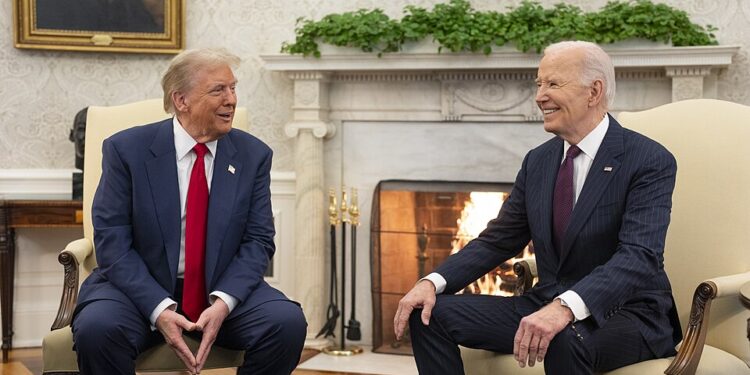
Former President Joe Biden is making headlines again after revealing what former German Chancellor Angela Merkel allegedly told him about President Donald Trump during private conversations.
The surprising claims are included in Biden’s upcoming memoir, Promise Me, America, scheduled for release on November 17, 2026.
According to excerpts reported by Newsweek, Merkel privately questioned Trump’s personality, leadership style, and relationships with certain foreign leaders during his first term in the White House.
However, the revelations also bring renewed attention to a longstanding political disagreement over Trump’s approach to international diplomacy and his efforts to put American interests first.
Biden Reveals Merkel’s Private Opinion Of Trump
In his new memoir, Biden describes conversations he had with Merkel after taking office in January 2021.
According to Biden’s account, the former German leader expressed concerns about Trump’s behavior during their diplomatic meetings.
Merkel reportedly described Trump as “emotional” and suggested that his personal reactions sometimes appeared to influence his decisions more than established facts.
She also questioned Trump’s interest in Russian President Vladimir Putin and other powerful foreign leaders with authoritarian tendencies.
Biden indicated that he shared Merkel’s confusion about Trump’s approach to those relationships.
The comments offer a glimpse into the private conversations that reportedly took place between American and European leaders following Trump’s departure from office in 2021.
However, the descriptions come from Biden’s memoir and should be understood as his recollection of Merkel’s remarks, rather than independently verified transcripts.
Trump And Merkel Had A Complicated Relationship
The relationship between Trump and Merkel was frequently strained during his first administration.
Although Germany remained an important American ally, the two leaders disagreed on several major policy issues.
Their differences included international trade, military spending, immigration, energy security, and the responsibilities of NATO members.
One of their most widely discussed encounters occurred during Merkel’s visit to the White House in March 2017.
While photographers gathered for pictures in the Oval Office, Merkel appeared to ask Trump whether he wanted to shake hands.
Trump did not respond to the request, creating an awkward moment that quickly attracted international attention.
Merkel reportedly remembered the encounter as an example of the difficulties she experienced when dealing with the American president.
Despite their disagreements, the two leaders continued conducting official business throughout Trump’s first term.
Trump Pressured Germany To Pay More For Defense
While Biden’s memoir focuses heavily on Merkel’s personal impressions of Trump, their disagreements also involved major policy questions affecting American taxpayers.
Trump repeatedly criticized Germany and other NATO allies for failing to contribute enough toward their own national defense.
He argued that the United States had spent too much money protecting wealthy European countries while those governments failed to meet agreed-upon defense-spending goals.
At the time, NATO members had committed to moving toward spending at least 2 percent of their gross domestic product on defense.
Trump insisted that Germany should take greater responsibility for its security instead of relying so heavily on American military resources.
His position became a central part of his broader America First foreign policy.
Merkel, meanwhile, defended Germany’s approach to international cooperation and frequently disagreed with Trump’s confrontational negotiating tactics.
The dispute highlighted a fundamental difference between the two leaders over how America’s alliances should operate.
Germany’s Russian Energy Dependence Also Sparked Conflict
Another major source of tension involved Germany’s energy relationship with Russia.
During his first administration, Trump repeatedly warned European leaders about becoming too dependent on Russian natural gas.
He was particularly critical of the Nord Stream 2 pipeline project, which was designed to transport Russian gas directly to Germany.
Trump argued that it made little sense for the United States to spend substantial resources defending European allies against potential Russian aggression while those same countries continued purchasing Russian energy.
His warnings became especially relevant to international discussions after Russia launched its full-scale invasion of Ukraine in February 2022.
Germany subsequently reconsidered important elements of its energy policy and moved to reduce its dependence on Russian supplies.
For supporters of Trump’s approach, the dispute serves as an example of his willingness to confront European allies over policies he believed undermined Western security.
Merkel Previously Discussed Her Concerns About Trump
Biden’s upcoming book is not the first time Merkel’s personal views of Trump have received public attention.
In her 2024 memoir, Freedom, Merkel reflected on the difficulties she experienced while working with the Republican president.
She described Trump’s approach to international relationships as unusually competitive and suggested that he frequently viewed diplomatic negotiations in terms of winners and losers.
Merkel generally preferred cooperation between countries through established institutions and international agreements.
Trump took a different approach.
He frequently criticized arrangements that he believed placed American businesses, workers, and taxpayers at a disadvantage.
His administration emphasized stronger borders, more balanced trade relationships, greater energy independence, and increased defense contributions from American allies.
Those competing philosophies helped explain why Trump and Merkel frequently clashed, even while maintaining an important diplomatic relationship.
Biden’s New Memoir Puts Trump Back In The Spotlight
The latest revelations are part of Biden’s broader effort to explain his presidency and reflect on the political developments that shaped his time in office.
His memoir also revisits his controversial decision to seek reelection in 2024 and the circumstances surrounding his eventual withdrawal from the presidential race.
After Biden ended his campaign in July 2024, Vice President Kamala Harris became the Democratic nominee.
Trump ultimately defeated Harris in the November election, securing his return to the White House in January 2025.
Biden’s book reportedly contains extensive reflections on Trump, including their political rivalry and the challenges Biden says he faced during his administration.
Interestingly, the former president also describes moments when Trump behaved warmly toward him in private, despite their bitter public disagreements.
These accounts provide a more complicated picture of the relationship between the two political rivals.
What The Latest Trump Revelation Really Shows
Biden’s disclosure about Merkel is likely to generate renewed discussion about Trump’s relationships with foreign leaders.
However, the underlying disagreements between Trump and the former German chancellor were never entirely hidden from public view.
The two leaders represented very different approaches to diplomacy, international cooperation, military alliances, and economic policy.
Merkel often favored negotiation and consensus among Western governments.
Trump emphasized direct negotiations, national sovereignty, and securing stronger arrangements for the United States.
Those differences frequently produced tense encounters and sharp public disagreements.
The latest revelations from Biden’s memoir offer another perspective on those diplomatic disputes, but they do not change the fact that Trump and Merkel regularly disagreed over significant international policy decisions.
As Biden prepares to release his book, the renewed focus on Trump’s first administration is also raising familiar questions about what American leadership should look like on the world stage.
For voters evaluating Trump’s record, the larger issue remains whether his unconventional diplomatic approach delivered meaningful results for American security, economic interests, and taxpayers.