

Yes
I do.
No
I don’t.
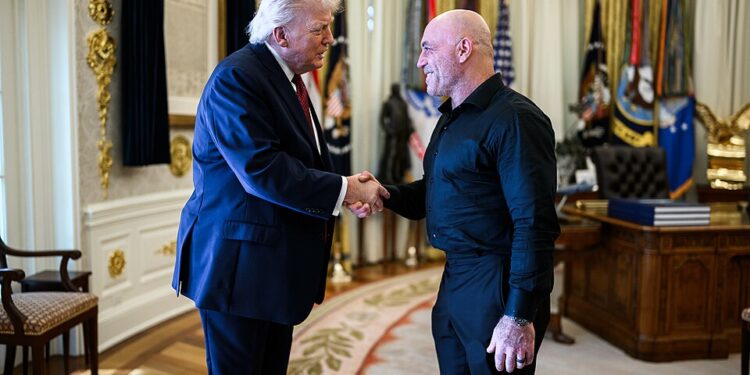
The political fallout from the 2026 midterm elections continues to generate debate across the country, and popular podcast host Joe Rogan has added his voice to the conversation with critical remarks about President Donald Trump and the direction of his administration.
Rogan, who endorsed Trump during the 2024 presidential campaign, recently suggested that the president has lost the support of a substantial portion of the American public.
During the November 13 episode of The Joe Rogan Experience, Rogan expressed dissatisfaction with several administration policies and argued that Trump’s political support had weakened beyond the coalition that helped return him to the White House.
His comments followed a difficult election for Republicans.
In the November 3 midterms, Democrats secured enough victories to regain control of both the House of Representatives and the Senate, delivering a significant political setback for the president’s party.
The results sparked widespread discussion about why Republicans struggled and what the outcome might mean for the remainder of Trump’s presidency.
Rogan pointed to concerns about the ongoing conflict involving Iran and the administration’s immigration enforcement tactics as factors contributing to declining support.
His remarks were particularly notable because of his previous support for Trump and his influence among podcast listeners, including younger Americans who have become an increasingly important audience in national political discussions.
Some political observers believe Rogan’s comments reflect broader frustration among voters who supported Trump in 2024 but have since developed concerns about certain policies.
They point to the midterm results, economic dissatisfaction, and shifting public attitudes as evidence that the administration faces challenges rebuilding its political coalition.
However, others caution against interpreting a midterm defeat as proof that Trump has permanently lost the confidence of most Americans.
Midterm elections frequently produce losses for the party occupying the White House, and voters may base their decisions on several factors, including individual candidates, local economic conditions, and congressional performance.
Republican supporters also argue that Trump’s political standing cannot be determined solely by one election cycle or by the criticism of a prominent media personality.
They maintain that the president still has time to address voter concerns, advance his economic priorities, and demonstrate results before the next presidential election.
Meanwhile, polling following the midterms indicates that dissatisfaction with the direction of the country extends beyond one political party.
That makes the political environment more complicated than a simple contest between Trump supporters and Trump opponents.
Rogan’s comments nevertheless raise an important question about the president’s popularity and the durability of the coalition that returned him to office.