
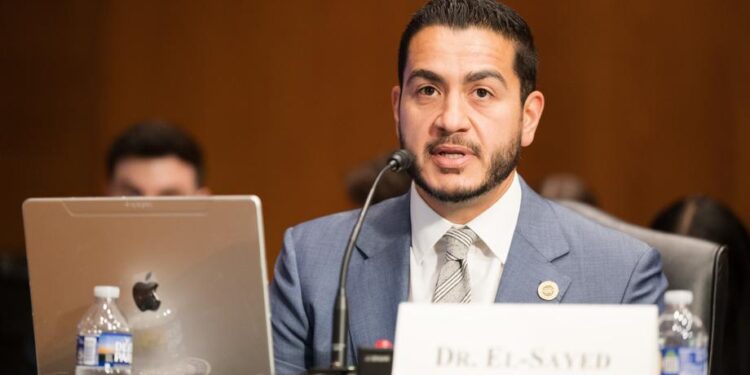
Vice President JD Vance is extending an unexpected olive branch to one of his fiercest Democratic critics, making a surprising move that could have significant implications for President Donald Trump’s administration and the future of Washington politics.
After months of heated political exchanges, Vance’s office has reached out to Michigan Democratic Senator-elect Abdul El-Sayed to arrange a meeting, despite their bitter disagreements during the 2026 midterm elections.
The development represents a dramatic change in tone between two politicians who recently appeared to have little interest in finding common ground.
With Democrats preparing to take control of Congress, the Trump administration faces new challenges in advancing its legislative priorities. Vance’s willingness to engage with a progressive Democrat could offer an early indication of how Republicans intend to navigate the changing political landscape.
JD Vance Makes Unexpected Move After Bitter Campaign
The potential meeting comes just weeks after El-Sayed defeated Republican Mike Rogers in Michigan’s closely watched U.S. Senate race.
Vance had strongly supported Rogers throughout the campaign, frequently criticizing El-Sayed and warning voters about his progressive political agenda.
Their exchanges became increasingly personal as Election Day approached.
During an August campaign appearance in Michigan, Vance characterized El-Sayed as “very, very evil,” demonstrating the intensity of their political disagreements.
The vice president also publicly defended his wife, Usha Vance, after El-Sayed made remarks referencing her.
Those confrontations made the prospect of a friendly discussion between the two politicians seem particularly unlikely.
However, the political environment has changed considerably since the November 3 elections.
According to reports, Vance’s office contacted El-Sayed’s representatives about arranging a conversation after both sides expressed interest in exploring areas of potential cooperation.
Although the meeting has not been publicly detailed, the outreach suggests that Vance is prepared to look beyond their contentious campaign history.
Vance Sends Clear Message About Working Together
The vice president addressed the possibility of working with El-Sayed during a recent appearance on Fox News with Laura Ingraham.
Vance indicated that he would be willing to cooperate with the incoming Michigan senator if their efforts could produce meaningful improvements for the people they represent.
The remarks marked a significant departure from the confrontational language he used during the election campaign.
For Vance, the discussion appears to center on whether elected officials with opposing political beliefs can still reach agreements that benefit American families.
That approach could prove especially important as the Trump administration prepares to work with a Congress controlled by Democrats.
However, Vance has not suggested that he intends to abandon the administration’s conservative priorities or embrace El-Sayed’s progressive platform.
Instead, the possibility of a meeting raises a broader question about whether Republicans and Democrats can cooperate on practical issues while maintaining their fundamental political differences.
El-Sayed Responds To The Vice President
El-Sayed has also expressed an interest in discussing potential areas of cooperation with Vance.
Following the vice president’s public comments, the Michigan Democrat indicated that his priority would remain advancing policies he believes would benefit working Americans.
In a social media message, El-Sayed welcomed the possibility of a conversation.
His willingness to participate is particularly noteworthy given the harsh criticism he received from Vance throughout the Senate campaign.
Still, substantial disagreements remain between the two men.
El-Sayed has been an outspoken supporter of Medicare for All, a proposal that would significantly expand the federal government’s role in providing healthcare coverage.
The Trump administration has opposed that approach, favoring different policies for addressing healthcare costs and access.
For older Americans, debates surrounding healthcare, Medicare, government spending, and financial security remain especially consequential.
Although El-Sayed’s proposals would represent substantial changes to the healthcare system, there is no indication that Vance has agreed to support them.
Any potential cooperation would require the two politicians to identify issues where their priorities overlap.
Democrats’ Election Victories Create New Challenges For Trump
The surprising outreach comes after Republicans suffered major setbacks in the 2026 midterm elections.
Democrats secured control of both the House of Representatives and the Senate, creating a more difficult legislative environment for President Trump during the remainder of his term.
With control of Congress changing hands in January, the administration will face additional obstacles when attempting to advance major legislation.
Republicans will need Democratic cooperation to pass many of their priorities, making relationships between the White House and opposition lawmakers increasingly important.
The situation also creates political risks.
Conservative voters will likely be watching to see whether the administration can secure meaningful legislative victories without making concessions that undermine its central promises.
For Democrats, the challenge will be deciding when cooperation with Trump benefits their constituents and when maintaining political opposition better serves their goals.
Vance’s willingness to speak with El-Sayed could represent an attempt to establish working relationships before the next congressional session begins.
Whether those conversations produce actual agreements remains uncertain.
What Does This Mean For Trump’s Political Agenda?
The potential meeting raises questions about how President Trump and Vice President Vance will approach the next two years.
During his presidency, Trump has emphasized policies involving border security, economic growth, energy production, and reducing the financial pressures facing American households.
Advancing those priorities through a Democratic-controlled Congress will require a different political strategy than working with Republican majorities.
Vance’s outreach may reflect a recognition that negotiations with political opponents will become an unavoidable part of governing.
However, speaking with Democrats does not necessarily mean accepting their policy demands.
For conservative Republicans, the larger issue will be whether bipartisan discussions result in legislation consistent with the administration’s objectives.
Any agreement involving federal spending, healthcare, or economic policy would likely face scrutiny from both political parties.
The distinction between cooperation and compromise could become one of the defining challenges of the next congressional session.
Vance’s Political Future Also Draws Attention
The development comes as Vance continues to attract attention as a possible Republican presidential candidate in 2028.
Although he has not formally announced a campaign, the vice president remains one of the most prominent figures being discussed as a potential successor to Trump.
His handling of relations with Democratic lawmakers could become an important part of his political record.
Demonstrating an ability to negotiate across party lines may strengthen his governing credentials, particularly if those discussions produce tangible results.
At the same time, Vance must maintain the confidence of conservative voters who expect the Trump administration to defend its core principles.
The challenge will be balancing political pragmatism with the priorities that helped bring Republicans back to the White House.
The Michigan meeting, if it takes place, could provide an early example of how Vance intends to manage that balance.
Will Vance And El-Sayed Find Common Ground?
Despite the unexpected change in tone, there are still major obstacles to cooperation.
Vance and El-Sayed disagree on fundamental questions involving healthcare, government authority, and economic policy.
Their political differences were on full display during the Michigan Senate campaign, and those disagreements have not disappeared simply because both sides are willing to talk.
Nevertheless, the outreach demonstrates that even bitter political opponents may recognize the importance of maintaining communication once an election concludes.
For Americans concerned about rising costs, healthcare expenses, and the direction of the federal government, the practical results of any negotiations will matter more than the political symbolism.
The coming months will determine whether Vance’s unexpected move leads to meaningful discussions or remains little more than a temporary gesture of goodwill.
For now, the biggest surprise is that Vice President JD Vance has opened the door to discussions with a Democrat he sharply criticized just months earlier.
Whether that decision ultimately helps President Trump advance his agenda remains an open question.