
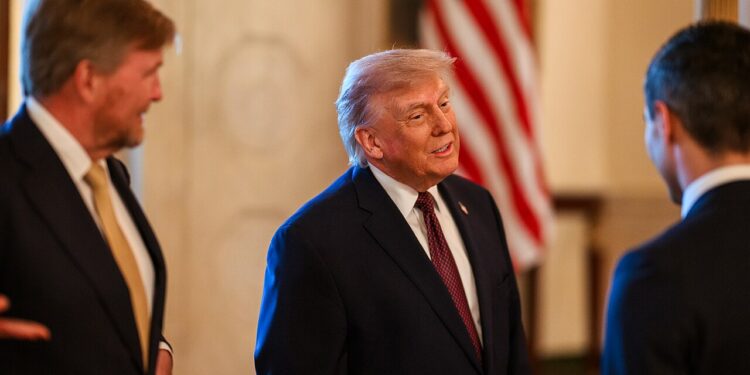
President Donald Trump is stirring speculation about the 2028 presidential election after suggesting that Republicans could have some unexpected choices when it comes time to select their next nominee.
While Vice President JD Vance and Secretary of State Marco Rubio have emerged as two prominent potential contenders, Trump made it clear that the Republican presidential field could include other serious candidates.
During a November 21 interview with Fox News, the president praised both members of his administration while leaving open the possibility that another Republican could become a major force in the race.
His remarks also raised an important question about the GOP’s future: Will Republicans hold a competitive presidential primary, or could party leaders unite behind a ticket before the general election?
Trump Sends Clear Message About Vance And Rubio
During an appearance on Fox News’ “Saturday in America,” Trump discussed the future of Republican leadership with host Kayleigh McEnany.
The conversation turned to the 2028 presidential election and the potential candidates who could compete for the White House.
Trump spoke favorably about Vice President JD Vance and Secretary of State Marco Rubio, highlighting their performance in the administration and their popularity.
“The two of them are doing fantastically,” Trump said.
Both men have established themselves as influential figures within the Republican Party.
Vance serves as the nation’s vice president, giving him a prominent position in the administration and significant national visibility.
Rubio, meanwhile, brings years of experience in the U.S. Senate and now oversees American diplomacy as secretary of state.
Their positions could make them serious contenders when Republicans begin choosing their next presidential nominee.
However, Trump stopped short of endorsing either man.
Instead, he suggested that the GOP could have additional options that many political observers are not currently considering.
Trump Hints At Unexpected Republican Contenders
One of the most significant moments of the interview came when Trump discussed the possibility of other Republicans entering the 2028 presidential race.
Although Vance and Rubio received considerable praise, the president emphasized that his party has a number of capable leaders.
“But you could have some surprises,” Trump said.
The remark left open the possibility that another Republican could emerge as a leading contender before the nomination process begins in earnest.
Several prominent Republicans have already been mentioned as potential presidential candidates.
Texas Sen. Ted Cruz and Florida Gov. Ron DeSantis are among the familiar names that could attract attention.
Former Vice President Mike Pence, former Georgia Gov. Brian Kemp and former Virginia Gov. Glenn Youngkin have also been discussed as possible contenders.
Each would bring different political experience and a distinct approach to a presidential campaign.
Cruz and DeSantis have previously competed for the Republican presidential nomination, while other potential candidates have experience in state or national leadership.
For Republican voters, a larger field could create an opportunity to evaluate competing ideas about the party’s future.
Trump’s comments suggest that the 2028 Republican presidential nomination remains far from decided.
Could Republicans Unite Behind One Presidential Ticket?
Trump also addressed another possibility that could dramatically change the 2028 election.
McEnany asked whether Republicans should hold an open presidential primary featuring multiple candidates and debates or consider supporting a unified ticket.
The president indicated that both approaches remain possibilities.
Trump expressed particular interest in the potential financial benefits of Republican unity.
A lengthy primary campaign can require candidates to spend substantial amounts of money competing against members of their own party.
That money could otherwise be available during the general election against the Democratic nominee.
Trump suggested that a unity ticket might allow Republicans to conserve resources while preparing for the broader national contest.
However, the president did not rule out a competitive primary.
That distinction is important because Republican voters have traditionally played a central role in determining the party’s presidential nominee.
A primary featuring multiple candidates would allow voters to compare records, policies and leadership styles.
A unity ticket, on the other hand, could reduce internal competition and allow Republicans to focus their attention on the general election sooner.
Trump did not announce a preferred arrangement or identify a specific presidential ticket.
Trump’s Influence Could Shape The 2028 Republican Primary
Although Trump has not chosen a successor, his eventual endorsement could become an important factor in the Republican presidential race.
The president remains a central figure in the party, and his support could provide a candidate with increased national visibility and political momentum.
For Vance, serving alongside Trump provides an opportunity to demonstrate his leadership while helping advance the administration’s priorities.
Rubio could make a case for his candidacy by emphasizing foreign policy experience and his responsibilities as secretary of state.
Other potential candidates may seek to distinguish themselves through their records as governors, senators or national political leaders.
Republican voters could also weigh which candidate they believe is best prepared to address major issues facing the country.
Those issues are likely to include inflation, economic growth, immigration, border security, national defense and government spending.
While Trump’s endorsement could influence the contest, Republican primary voters will ultimately determine the party’s nominee through the nomination process.
Trump Also Weighs In On Democrats’ 2028 Prospects
The president’s interview was not limited to Republicans.
Trump also discussed possible Democratic presidential candidates, including former Vice President Kamala Harris and New York Rep. Alexandria Ocasio-Cortez.
Harris, who lost to Trump in the 2024 presidential election, remains a nationally recognized Democratic figure.
Ocasio-Cortez has also attracted attention as Democrats consider their future leadership.
Trump acknowledged the political visibility of both women but suggested that Democrats might ultimately nominate someone who is not currently well known nationwide.
That possibility reflects the uncertainty surrounding the next presidential election.
Both parties have time to evaluate potential candidates, and additional figures could enter the conversation before the first presidential primaries.
The developing political landscape also means that early speculation may not accurately predict which candidates will eventually lead their parties.
What The 2028 Election Could Mean For Republican Voters
The next presidential election will give Republicans an opportunity to decide what direction they want their party to take after Trump’s second term.
Potential candidates will face questions about how they intend to continue or modify the administration’s policies.
Economic concerns could play a particularly important role.
Republican voters may closely examine proposals dealing with taxes, federal spending, retirement security and the cost of living.
Immigration enforcement, national security and America’s relationships with foreign governments could also become major campaign issues.
Candidates hoping to secure the Republican nomination will likely need to demonstrate that they can unite different groups within the party while also appealing to voters outside its traditional base.
The outcome of the 2026 midterm elections adds another factor as Republicans assess their political strategy heading into 2028.
For the eventual nominee, success could depend on presenting a clear agenda that connects with voters concerned about their families, finances and the country’s future.
Trump Makes One Thing Clear About The Republican Party’s Future
Despite speculation about who might succeed him, Trump has not publicly committed to supporting a particular Republican candidate.
Instead, he has praised Vance and Rubio while acknowledging that other qualified Republicans could emerge.
The president also indicated that he intends to remain involved as the nomination process develops.
That involvement could have significant implications for the candidates seeking Republican support.
Whether the party ultimately chooses a competitive primary or rallies behind a unified ticket remains uncertain.
For now, Vance and Rubio are among the most recognizable potential contenders, but Trump’s latest comments suggest Republicans should not assume the race will come down to just two names.
With the 2028 presidential election approaching, the biggest surprise may be which Republican ultimately emerges as the party’s next leader.
And with Trump promising to follow the process closely, his influence could remain an important part of the Republican presidential race.