
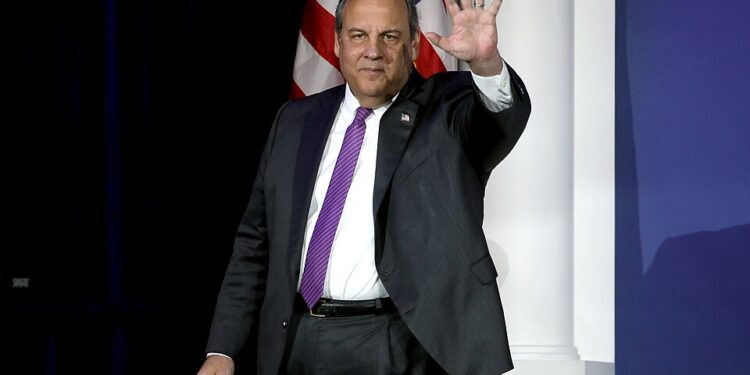
Former Republican New Jersey Governor Chris Christie has renewed his feud with President Donald Trump’s family, this time taking aim at presidential son-in-law Jared Kushner over his involvement in international peace negotiations.
Christie’s latest remarks came after Kushner discussed the Trump administration’s efforts to negotiate an end to the ongoing war between Russia and Ukraine.
The controversy has reignited disagreements over American foreign policy, national security and the administration’s approach to dealing with Russian President Vladimir Putin.
Kushner, who is married to Trump’s daughter Ivanka, has been working alongside special envoy Steve Witkoff to help secure a diplomatic resolution to the conflict.
However, Christie apparently has serious objections to how Kushner is approaching those negotiations.
Christie Takes Aim at Trump’s Son-in-Law
During an interview with Axel Springer CEO Mathias Döpfner, Kushner explained that his primary objective was to bring the fighting to an end rather than focus negotiations on assigning blame.
Kushner suggested that successful diplomacy requires dealing with international leaders and circumstances as they currently exist.
He also described Putin as a highly prepared and experienced political figure, characterizing the Russian president as a “grandmaster of politics.”
Those remarks quickly attracted criticism from opponents of the Trump administration, including Christie.
In a November 27 social media post, the former Republican governor questioned why individuals involved in the administration’s foreign policy efforts had not considered resigning.
Christie argued that Kushner’s remarks represented a troubling approach to American diplomacy and expressed frustration with his influence over international negotiations.
His criticism highlights a broader disagreement about whether American negotiators should publicly condemn foreign adversaries during peace talks or prioritize maintaining diplomatic communication.
Trump Administration Faces Difficult Foreign Policy Challenge
Ending the Russia-Ukraine war remains one of the most complicated international challenges facing the Trump administration.
Beyond the humanitarian consequences, the conflict has created considerable uncertainty surrounding international energy markets, defense spending, global trade and economic stability.
American taxpayers also have a financial interest in how Washington manages its overseas commitments, particularly when federal spending and the national debt remain significant domestic concerns.
Supporters of direct diplomatic engagement argue that negotiating with foreign adversaries does not necessarily constitute an endorsement of their actions.
From that perspective, maintaining communication with Moscow could help establish the conditions necessary for a ceasefire and an eventual peace agreement.
Critics, however, argue that American negotiators must avoid making statements that could undermine Ukraine’s negotiating position or appear to excuse Russia’s invasion.
The challenge facing the administration is finding a workable balance between pursuing peace, protecting American national security interests and maintaining relationships with international allies.
Christie’s History With the Trump Family
The latest confrontation is hardly the first time Christie has publicly criticized the Kushner family.
Their contentious relationship dates back more than two decades, when Christie served as a federal prosecutor in New Jersey.
Christie oversaw the prosecution of Jared’s father, Charles Kushner, in a criminal case involving tax offenses, witness retaliation and false statements to federal election authorities.
Years later, Christie became an important political ally of Donald Trump, endorsing him during the 2016 presidential election.
Their relationship eventually deteriorated, and Christie emerged as one of Trump’s most outspoken Republican opponents.
He also challenged Trump for the Republican presidential nomination during the 2024 election cycle before ending his campaign.
Given that lengthy history, Christie’s latest criticism comes against a backdrop of both personal disagreements and substantial political differences.
Will Trump’s Peace Negotiations Deliver Results?
Ultimately, the effectiveness of the administration’s diplomatic strategy will depend on whether its negotiators can produce a sustainable agreement.
A successful resolution could reduce international uncertainty, ease pressure on global energy markets and potentially limit future American financial commitments associated with the conflict.
However, any agreement would also need to address serious security concerns and the possibility of renewed hostilities.
Kushner’s comments suggest that his immediate priority is stopping the fighting through practical negotiations, while Christie believes that questions of responsibility and diplomatic principles should remain central to the process.
For now, the disagreement represents another public division between Trump’s administration and one of his former Republican allies.
Whether Kushner and Witkoff can help secure a lasting peace agreement remains an open question, but the outcome could have significant consequences for American foreign policy, taxpayers and international security.