
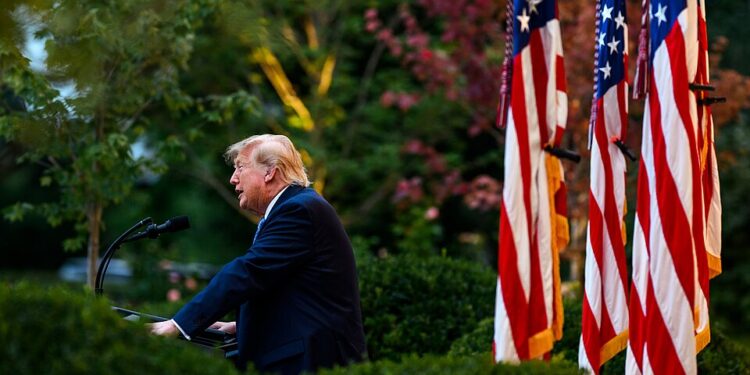
President Donald Trump is once again taking an unconventional approach to international diplomacy, revealing that he would welcome Russian President Vladimir Putin to the upcoming G20 summit in Florida.
Speaking with reporters on Thanksgiving, Trump indicated that he would have no objection to Putin traveling to the United States for the December gathering, despite ongoing tensions between Russia and European nations over the war in Ukraine.
“If it were up to me, I’d like to have him,” Trump said.
The president acknowledged that some international leaders would likely oppose Putin’s attendance. However, Trump also expressed doubts about whether the Russian president would ultimately decide to make the trip.
The G20 summit, scheduled for December 14 and 15 in Miami, will bring together representatives from many of the world’s largest economies to discuss international trade, economic growth, financial stability and other global challenges.
Trump Keeps Diplomatic Options Open
Trump’s remarks come as his administration continues pursuing a potential agreement to end the devastating conflict between Russia and Ukraine.
The president recently met with Putin in China, where discussions included the ongoing war and broader international security concerns.
Trump subsequently revealed that he had encouraged the Russian leader to reduce military aggression across Europe, hoping that diplomatic negotiations could produce a lasting settlement.
The Kremlin has indicated that Putin has not yet made a final decision regarding his attendance at the Florida summit.
While welcoming Putin to American soil would undoubtedly generate controversy, direct communication between rival governments has long been an important component of international diplomacy.
Supporters of diplomatic engagement argue that maintaining communication with adversaries can create opportunities to prevent further military escalation. Critics, however, contend that welcoming Putin could undermine efforts to hold Russia accountable for its invasion of Ukraine.
European Security Remains a Major Concern
European governments continue to face considerable uncertainty surrounding Russia’s military activities and the future of regional security.
German Chancellor Friedrich Merz has warned about the growing threats posed by Moscow, while Ukrainian President Volodymyr Zelensky has expressed concerns about Trump’s relationship with Putin.
Ukraine’s government wants Washington to maintain pressure on Russia and ensure that any eventual peace agreement protects Ukrainian sovereignty.
The debate highlights the difficult balance between pursuing diplomatic negotiations and maintaining strong relationships with America’s international allies.
Trump has also questioned the decision to remove Russia from the former Group of Eight following its annexation of Crimea in 2014, suggesting that continued diplomatic engagement might have helped prevent subsequent hostilities.
Whether that approach would have changed the course of events remains uncertain.
Why the Russia-Ukraine War Matters to the American Economy
Beyond national security, the ongoing conflict carries significant economic implications for American households and businesses.
International conflicts can disrupt energy markets, increase transportation expenses, complicate global supply chains and contribute to uncertainty across financial markets.
Crude oil prices, natural gas supplies, agricultural exports and international trade are among the economic areas vulnerable to instability in Eastern Europe.
For American consumers, these disruptions can potentially influence gasoline prices, grocery expenses and household energy bills.
A sustainable peace agreement could help reduce some of that uncertainty, although the economic benefits would depend heavily on the terms of any settlement, international sanctions and broader market conditions.
The upcoming G20 summit could provide an opportunity for world leaders to address these issues alongside discussions about economic cooperation and investment.
All Eyes Turn to Florida
Putin’s potential appearance in Miami could become one of the most closely watched developments of the international gathering.
For Washington, the challenge will be determining whether renewed diplomatic engagement can produce meaningful progress without compromising American national security interests or existing international commitments.
The White House must also consider how any negotiations could affect America’s relationship with NATO, European partners and Ukraine.
For now, Putin’s attendance remains unconfirmed. His decision could determine whether December’s summit becomes a significant opportunity for peace negotiations or simply another chapter in the ongoing diplomatic dispute between Russia and the West.
Ultimately, the success of Trump’s diplomatic approach will be measured not by who attends the summit, but by whether negotiations produce lasting improvements in international security and economic stability.