
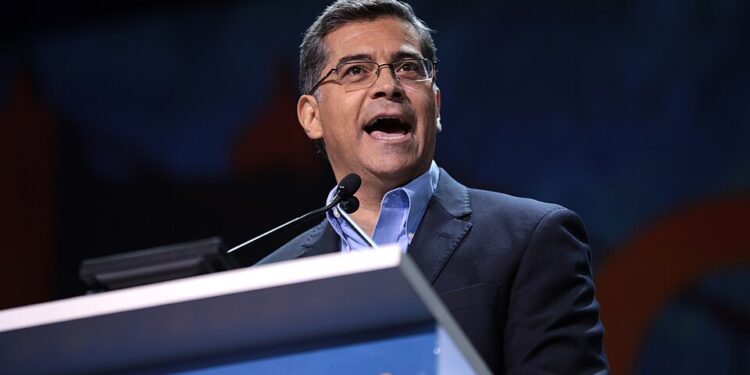
Democrats are wasting little time looking to capitalize on their historic 2026 midterm election victories, and a potential new partnership between California and Texas could have major implications for the future of American politics.
California Governor-elect Xavier Becerra is expressing interest in joining forces with incoming Texas Democratic Governor Gina Hinojosa following a dramatic political shift in the Lone Star State.
The proposed alliance between two of America’s most economically powerful states is raising questions about government spending, taxation, energy policy and the future of Republican influence in Texas.
For decades, Texas has been recognized as a stronghold of Republican leadership. Now, Democrats are hoping their recent electoral success will mark the beginning of a lasting political realignment.
California Democrat Reveals Plans for Texas Partnership
During a recent interview with Politico, Becerra discussed the possibility of working closely with Texas under its incoming Democratic leadership.
The former Biden administration health and human services secretary described the potential partnership as a “massive one-two punch.”
Becerra acknowledged that he had not yet directly discussed the arrangement with Hinojosa but indicated that he planned to contact her.
The prospect of California and Texas working together represents a significant departure from the political relationship Americans have witnessed for decades.
Under Republican leadership, Texas frequently pursued policies that differed sharply from California’s approach to taxation, business regulations, energy production and government spending.
With Democrats preparing to lead both states, those longstanding differences could become the subject of renewed debate.
Democrats Seek to Build on Historic Texas Election Victories
The 2026 midterm elections delivered a significant political setback for Republicans in Texas.
Democrat Gina Hinojosa defeated Republican Gov. Greg Abbott, while Democratic Senate candidate James Talarico secured a victory over Republican Ken Paxton.
Democrats also gained control of the Texas House of Representatives, although Republicans maintained their majority in the state Senate.
These victories have given Democrats a significant opportunity to expand their influence in a state that Republicans have relied upon for decades.
Becerra also addressed former California residents who moved to Texas, encouraging continued support for Democratic political gains nationwide.
However, maintaining political control could prove considerably more challenging than winning a single election.
Texas voters will ultimately judge their new leadership based on economic conditions, public safety, government accountability and the affordability of everyday necessities.
Could California-Style Policies Come to Texas?
Among the biggest questions surrounding the proposed partnership is how cooperation between California and Texas could affect residents and businesses.
Texas has long attracted families, retirees, entrepreneurs and major corporations because of its lack of a state personal income tax, business environment and economic opportunities.
California, meanwhile, has taken a different approach to environmental regulations, public programs and taxation.
Becerra has identified health care, education and clean energy among his policy priorities. Cooperation with Texas could potentially strengthen efforts to obtain federal support for these initiatives.
Supporters may argue that collaboration between the two states could create economic opportunities and help address common challenges.
Critics, however, may raise concerns about increased government spending, additional regulations and potential costs for taxpayers.
For Americans living on fixed incomes, managing retirement savings or operating small businesses, the financial consequences of future policy decisions could be particularly important.
No formal agreement between the two incoming administrations has been announced.
Texas Could Reshape the 2028 Presidential Election
Beyond state government, the political transformation in Texas could have enormous consequences for the next presidential election.
Texas has historically provided Republicans with one of their most valuable collections of Electoral College votes.
Should Democrats remain competitive in the Lone Star State in 2028, both political parties could be forced to reconsider their national campaign strategies.
A competitive Texas could also change how presidential candidates allocate campaign resources and prioritize issues affecting voters.
Nevertheless, Republicans retain considerable political influence throughout the state, and future election outcomes remain far from certain.
Economic performance, leadership decisions and voter satisfaction will all play important roles in determining whether the Democratic gains of 2026 prove temporary or lasting.
The Future of Texas Remains in the Hands of Voters
Becerra’s interest in establishing closer ties with Texas provides an early indication of how Democratic leaders hope to build upon their midterm election victories.
However, governing two of America’s largest states presents challenges that extend far beyond political alliances.
From affordable housing and rising household expenses to energy security, employment opportunities and public services, elected officials will face substantial expectations from the people they represent.
Texas residents will also be watching closely to see whether their state’s longstanding economic advantages remain intact under its incoming leadership.
While Democrats may hope to establish a durable political foothold in Texas, no partnership can guarantee permanent electoral control.
The ultimate decision about whether Texas remains blue or returns to Republican leadership will belong to the voters.