
President Donald Trump’s latest proposal to spend approximately $50 billion upgrading America’s aging air traffic control system is encountering unexpected resistance from Republican lawmakers, who are demanding answers about billions in previously approved federal funding.
The growing disagreement comes after a nationwide aviation emergency grounded flights across the United States, disrupting travel plans for millions of Americans and raising serious questions about the reliability of the country’s aviation infrastructure.
While Republicans largely agree that the nation’s air traffic control network needs significant improvements, several prominent GOP senators are questioning whether another massive federal spending package is justified.
At the center of the controversy is a straightforward question: Why should Congress approve another $50 billion when billions in previously authorized funding have not yet been spent?
The dispute is creating a political challenge for the Trump administration as lawmakers weigh the need for aviation safety against concerns about government spending and accountability.
Republicans Demand Answers Over Trump’s $50 Billion Request
Transportation Secretary Sean Duffy has urged Congress to provide substantial additional funding to modernize the Federal Aviation Administration’s aging equipment and communications infrastructure.
The administration initially sought approximately $30 billion before increasing its request to $50 billion following a nationwide aviation shutdown on November 13.
Administration officials argue that the recent disruption demonstrates the urgent need to replace outdated technology and strengthen the systems responsible for managing commercial air travel.
However, the sudden increase has raised concerns among Republican senators who want a detailed explanation of the proposed spending.
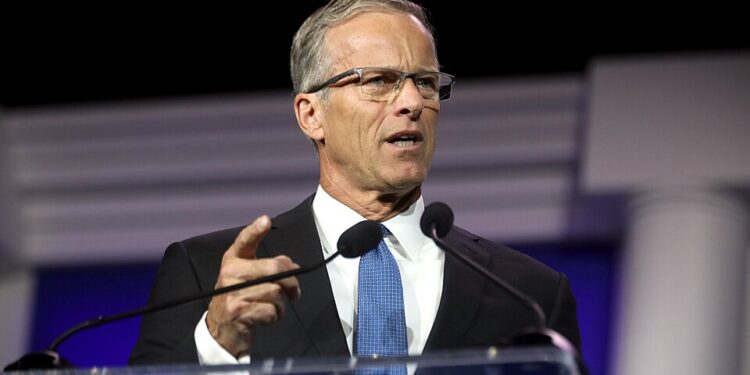
Senate Majority Leader John Thune of South Dakota has questioned why the administration needs such a large amount of additional money, particularly after Congress approved significant modernization funding last year.
Thune emphasized that lawmakers need more information about how the administration intends to use the requested funds.
His concerns reflect a broader sentiment among Senate Republicans: Improving aviation safety is essential, but approving billions in additional spending requires careful financial oversight.
Billions in Previously Approved Funding Remain Unspent
One of the most significant issues facing the Trump administration involves approximately $12.5 billion that Congress approved for air traffic control modernization in 2025.
According to Department of Transportation figures reported by Fox News, approximately $3.7 billion of that funding has been spent on various projects.
The remaining money has either been committed to contracts, remains unspent, or is designated for upcoming improvements.
That distinction has become central to the debate.
Republican lawmakers want to understand why the administration is requesting another massive investment before the earlier allocation has been fully used.
Transportation officials maintain that much of the existing money is already designated for specific projects and cannot simply be redirected to other modernization priorities.
They also argue that additional improvements require separate congressional authorization.
Nevertheless, lawmakers are seeking greater transparency about the existing projects, their expected completion dates, and the government’s broader spending strategy.
For taxpayers concerned about federal deficits and government efficiency, the disagreement raises questions about how Washington manages major infrastructure investments.
GOP Senators Question the Administration’s Spending Plans
Several Republican senators have expressed reservations about the administration’s approach.
Florida Sen. Rick Scott, who has extensive private-sector business experience, questioned whether officials have provided sufficient details about the proposed investment.
Scott indicated that major expenditures should be accompanied by clear budgets, defined objectives, and realistic completion schedules.
His concerns focus on whether the government has adequately planned how the additional funding would be used.
Louisiana Sen. John Kennedy has also demanded a more understandable explanation of the administration’s proposal.
Kennedy said he is willing to support funding necessary to repair critical aviation systems but wants officials to explain exactly what went wrong and how additional spending would prevent similar problems.
Oklahoma Sen. James Lankford expressed concerns about the size of the request and emphasized that any proposed improvements should be ready for implementation.
Lankford acknowledged that the earlier funding package was not intended to cover every modernization need.
However, he questioned whether the administration had sufficiently justified the latest spending proposal.
The concerns illustrate a growing divide between the White House’s desire for rapid infrastructure investment and congressional Republicans’ demands for greater accountability.
Nationwide Aviation Shutdown Exposes Serious Problems
The funding dispute follows a major disruption that affected commercial flights across the country.
On November 13, a technical malfunction involving air traffic control communications equipment forced the Federal Aviation Administration to issue a nationwide ground stop.
The interruption affected critical communications and radar information used by air traffic controllers.
Transportation officials identified a problem involving newly installed telecommunications equipment as a central factor in the failure.
The disruption ultimately contributed to more than 18,000 flight cancellations during the shutdown and subsequent recovery.
Airlines struggled to restore normal schedules, while passengers faced canceled trips, missed connections, and lengthy delays.
The incident underscored the importance of reliable federal aviation infrastructure.
When communications systems malfunction, the consequences can extend far beyond a single airport or region.
Even temporary interruptions can affect airline operations nationwide, creating substantial financial losses and inconvenience for travelers.
Administration officials argue that the disruption demonstrates why Congress must act quickly to upgrade outdated technology.
However, some Republican lawmakers believe the emergency makes financial accountability even more important.
Trump Administration Defends Its Modernization Efforts
Despite congressional skepticism, the Trump administration maintains that the country’s aviation infrastructure requires substantial investment.
Federal officials have warned that older communications equipment, aging facilities, and outdated technologies create operational challenges for the FAA.
One major priority involves replacing traditional copper communications wiring with modern fiber-optic technology.
According to Transportation Department figures, approximately $4.8 billion from the earlier modernization package was allocated to copper-wire replacement.
Roughly $2.3 billion has already been spent on that effort, with officials reporting that the telecommunications replacement program is approximately 70% complete.
The administration argues that modernization involves numerous interconnected systems and that completing one project does not eliminate the need for additional improvements.
Transportation officials have also explained that existing appropriations are often restricted to particular purposes.
As a result, money allocated for one infrastructure project may not legally be available for another.
That explanation could become important as lawmakers evaluate whether the latest funding request represents necessary investment or excessive federal spending.
Taxpayer Accountability Becomes Central Issue
For Republican lawmakers, the controversy involves more than aviation technology.
It also raises broader questions about how Congress should manage federal spending during a period of substantial national debt.
The federal government already faces significant financial obligations, and every major spending proposal adds pressure to an increasingly difficult budget environment.
Fiscal conservatives have repeatedly called for stronger oversight, greater efficiency, and more transparent accounting of taxpayer-funded projects.
Those principles are now being tested by the administration’s request.
Republicans must determine whether the proposed $50 billion represents a responsible investment in public safety or whether a smaller, more targeted package could accomplish the same objectives.
There is also the question of how quickly the government can turn additional appropriations into completed infrastructure improvements.
Simply approving more money does not guarantee that equipment will be installed faster or that future technical failures will be prevented.
Successful modernization requires effective planning, qualified contractors, reliable technology, and consistent congressional oversight.
The challenge for Washington will be ensuring that additional funding produces measurable improvements rather than merely increasing the size of federal budgets.
What the Debate Means for American Travelers
For Americans who depend on commercial aviation, the dispute has real-world implications.
The nation’s air traffic control system supports thousands of daily flights, connecting communities, businesses, and families across the country.
A reliable system is particularly important during busy holiday travel periods, when disruptions can leave passengers stranded far from home.
The recent nationwide shutdown demonstrated how vulnerable commercial travel can become when essential communications systems experience technical problems.
Modernizing outdated equipment could help reduce certain risks, improve operational reliability, and make the aviation network more resilient.
However, aviation experts and policymakers must also consider whether proposed investments address the specific problems responsible for recent failures.
Replacing equipment is only one part of maintaining a dependable transportation network.
Proper maintenance, comprehensive testing, backup communications systems, and trained personnel are also essential.
For travelers, the most important outcome is not the size of the federal spending package but whether the investment actually improves safety and reliability.
Could Congress Approve a Smaller Funding Package?
Although several Republican senators have questioned the $50 billion proposal, their concerns do not necessarily mean the administration’s modernization efforts will be rejected.
Some lawmakers have indicated that they would support additional spending focused on urgent aviation safety improvements.
That leaves open the possibility of a smaller funding package targeting the most critical infrastructure needs.
Such an approach could allow Congress to address immediate safety concerns while requiring the Transportation Department to provide additional documentation before receiving broader financial support.
Senate Commerce Committee Chairman Ted Cruz has also suggested that the administration should demonstrate progress using existing modernization funds before Congress commits to further large expenditures.
The ultimate outcome will depend on negotiations between congressional leaders and the White House.
Lawmakers may seek detailed spending reports, project timelines, and additional oversight provisions as conditions for approving new funding.
The administration, meanwhile, will likely continue emphasizing the urgency of replacing technology that federal officials consider outdated.
A Difficult Test for Trump and Congressional Republicans
The disagreement presents President Trump with a challenge involving members of his own party.
Republicans generally support strengthening American infrastructure and improving transportation safety.
They also frequently emphasize the importance of limiting unnecessary federal spending and holding government agencies accountable.
Those priorities are now colliding over one of the administration’s most expensive infrastructure proposals.
The White House wants Congress to act decisively following a serious aviation disruption.
Republican lawmakers want assurances that existing funds are being used effectively before approving another major financial commitment.
Both concerns carry significant consequences for the public.
Failing to modernize essential aviation technology could leave travelers vulnerable to additional disruptions.
But approving enormous spending packages without sufficient planning and oversight could create unnecessary costs for taxpayers.
The administration must now persuade Congress that its proposal addresses genuine infrastructure needs and that the requested funding will deliver measurable results.
What Happens Next?
Transportation Secretary Sean Duffy and FAA officials face increased scrutiny as congressional leaders examine the administration’s modernization strategy.
Republican lawmakers are expected to continue demanding detailed explanations about previously approved funding, outstanding infrastructure projects, and the justification for the new $50 billion request.
The administration must also demonstrate how its proposal would improve aviation reliability and reduce the possibility of future nationwide disruptions.
Whether Congress ultimately approves the entire request, authorizes a smaller package, or delays action pending further review remains uncertain.
What is clear is that the debate has become an important test of Washington’s ability to balance public safety with responsible spending.
For American taxpayers, the central issue is whether the federal government can deliver a safer, more reliable air traffic control system while ensuring that every dollar is spent wisely.
And with prominent Republicans now questioning the administration’s latest proposal, President Trump may need to convince members of his own party before his ambitious aviation overhaul can move forward.