
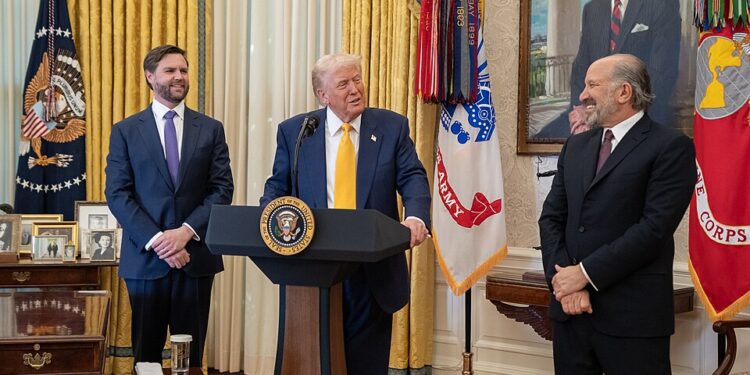
President Donald Trump is reportedly growing frustrated with Vice President JD Vance, raising new questions about their political relationship and who could eventually succeed Trump as the leader of the Republican Party.
According to a November 18 report from The New York Times, tensions have developed behind the scenes following Vance’s criticism of the war with Iran and its impact on the 2026 midterm elections.
The situation has become particularly interesting because Trump is also reportedly praising Secretary of State Marco Rubio as a potential Republican presidential candidate in 2028.
Although Trump and Vance continue to publicly present a united front, the latest reporting suggests disagreements may be emerging over the administration’s foreign policy decisions and the Republican Party’s political future.
Trump Reportedly Frustrated With His Vice President
The New York Times reported that Trump has privately complained about how Vance explained the Republican Party’s disappointing midterm election results.
Following the elections, Vance directly blamed the war with Iran for the GOP’s losses.
While Trump publicly acknowledged that the conflict hurt Republicans politically, the president reportedly believes Vance should have gone further in defending the administration’s decision to take military action.
According to individuals familiar with Trump’s private conversations, the president wanted his vice president to emphasize that confronting Iran was the correct decision, regardless of the political consequences.
The reported frustration has increased over the past two weeks.
The disagreement highlights a potentially sensitive issue within the administration: how Republican leaders should balance national security decisions against the concerns of American voters.
For Trump, defending his foreign policy record remains a central priority.
For Vance, acknowledging the political consequences of the conflict appears to be an important part of understanding why Republicans struggled in November.
Vance Blames Iran War For Republican Election Losses
Vance attracted considerable attention after offering a direct assessment of the Republican Party’s midterm performance.
“The reason we lost is the war,” Vance wrote in a social media post following the election.
The vice president argued that Republicans needed to acknowledge the conflict’s effect on voters rather than avoid discussing its political consequences.
His remarks came as Americans continued facing higher gasoline and energy costs associated with the conflict.
Those economic pressures have become especially important for families, retirees, and Americans living on fixed incomes.
Gasoline prices influence household transportation expenses, while rising energy costs can affect everything from grocery bills to monthly utility payments.
For many voters, these everyday financial concerns can carry considerable weight when deciding which political party deserves their support.
Vance suggested that Republicans must recognize those concerns as they consider how to rebuild their political standing.
Trump, meanwhile, has maintained that the decision to confront Iran was justified by national security considerations.
The difference between those two messages now appears to be creating friction behind the scenes.
Trump Privately Praises Marco Rubio
Another major development involves Secretary of State Marco Rubio.
According to The New York Times, Trump has privately spoken favorably about Rubio and suggested that he could become a strong presidential candidate.
Those comments are significant because Vance has widely been viewed as a leading potential successor to Trump.
Rubio, however, has taken a different approach to the administration’s handling of Iran.
While Vance has emphasized the conflict’s political consequences, Rubio has repeatedly defended Trump’s decision to launch military action.
Rubio has argued that confronting Iran was necessary to protect American national security interests.
That position reportedly aligns more closely with what Trump wants to hear from senior administration officials.
The president’s favorable comments about Rubio could potentially influence the early competition for the Republican presidential nomination in 2028.
However, there is an important distinction between privately praising a potential candidate and formally endorsing that person.
Trump has not announced that he is abandoning Vance or officially supporting Rubio as his preferred successor.
Nevertheless, the reported developments are drawing attention to the future leadership of the Republican Party.
Vance Denies Any Serious Rift With Trump
Despite the reported disagreements, Vance has publicly insisted that he remains aligned with the president.
During a Monday appearance on Fox News with Laura Ingraham, the vice president rejected suggestions of a major division within the administration.
Vance said there was “zero daylight” between himself and Trump regarding the conflict.
He explained that administration officials can debate important decisions privately, but the president ultimately determines the government’s direction.
Once Trump makes a decision, Vance argued, members of the administration are responsible for implementing it.
The vice president also acknowledged that the Iran conflict carried significant political consequences, including higher gasoline and energy prices.
His comments suggested that he believes it is possible to support Trump’s authority while recognizing that some administration decisions have created political challenges.
For now, Vance is attempting to maintain that distinction as speculation grows about his relationship with the president.
What The Report Means For Republicans In 2028
The reported tension comes as Republicans begin examining their future following the 2026 midterm elections.
The party must address several important questions, including how to regain voter confidence, respond to economic concerns, and prepare for the next presidential contest.
One of the biggest questions involves who will eventually carry forward Trump’s political agenda.
Vance has become a prominent figure within the America First movement, emphasizing immigration enforcement, American manufacturing, and policies intended to benefit domestic workers.
Rubio brings a different political background, including extensive experience in the Senate and a strong focus on foreign policy.
Both men occupy influential positions within the administration.
Both could also become significant figures in the Republican Party’s next presidential primary.
Trump’s eventual preference could have considerable influence on that contest, particularly among voters who remain committed to his political movement.
However, any suggestion that Rubio has officially replaced Vance as Trump’s preferred political successor would go beyond what has been publicly established.
The current reporting points to private frustration and favorable comments about Rubio, not a confirmed presidential endorsement.
Republican Unity Faces An Important Test
The developments also raise broader questions about Republican unity.
Following difficult election results, political parties frequently experience disagreements over strategy, messaging, and future leadership.
The Trump administration now faces the additional challenge of addressing economic pressures while defending its foreign policy decisions.
Vance’s assessment suggests that the Iran conflict had a substantial effect on Republican voters and the party’s electoral performance.
Trump’s reported response indicates that he wants the administration’s national security decisions defended more forcefully.
Rubio’s support for those decisions has reportedly strengthened his standing in the president’s private conversations.
Whether these differences eventually lead to a serious political rivalry remains unknown.
For the moment, Trump and Vance continue working together, and the vice president has publicly rejected the suggestion that they are divided.
Still, the possibility of competing political ambitions could become increasingly important as the 2028 election approaches.
What Happens Next For Trump And Vance?
The relationship between Trump and Vance will likely remain under close scrutiny as Republicans prepare for the next phase of the administration.
The president has not publicly withdrawn his support for Vance, and the vice president continues to defend Trump’s leadership.
However, the latest reporting suggests that disagreements over the Iran conflict may be influencing Trump’s private assessment of potential Republican successors.
Rubio’s growing prominence adds another element to an already complicated political situation.
For Republican voters, the larger issue may ultimately be whether the party can remain united while addressing economic concerns, national security challenges, and its future leadership.
Whether the reported frustration represents a temporary disagreement or the beginning of a larger political divide could become one of the most important questions facing Republicans ahead of 2028.