
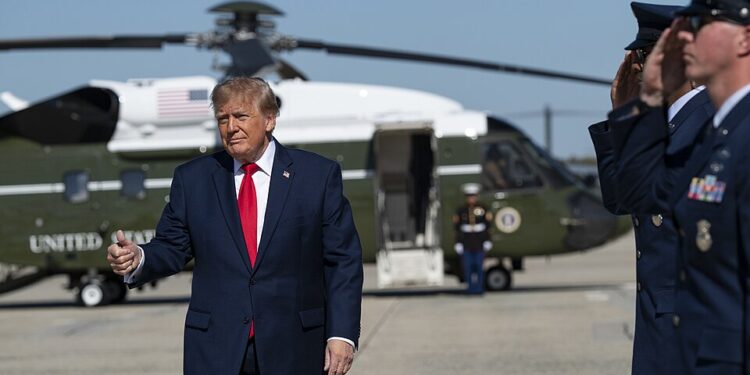
President Donald Trump is taking renewed aim at New York City’s controversial congestion pricing program, warning that rising driving fees could place additional financial pressure on American workers, families and small businesses.
Speaking during a Tuesday interview with the New York Post, Trump criticized the transportation policy and vowed to oppose efforts to introduce similar programs in other major American cities.
The president’s comments come as many Americans continue to carefully manage household budgets amid the ongoing costs of groceries, housing, insurance and transportation.
The debate is bringing renewed attention to government-imposed fees and whether motorists should be required to pay additional charges simply to access certain communities.
Trump Pushes Back Against Expensive Driving Fees
New York City’s congestion pricing program officially launched in January 2025, requiring most passenger vehicles entering designated areas of Manhattan during peak hours to pay an additional toll.
Most passenger vehicles using E-ZPass currently face a $9 peak-period charge. However, the financial burden is scheduled to increase over the coming years.
The toll is expected to rise to $12 in 2028 before reaching $15 in 2031.
At the current rate, someone paying the $9 toll five days a week for 50 weeks would spend approximately $2,250 annually on congestion charges alone.
That figure does not include gasoline, parking, car insurance, vehicle maintenance or other transportation expenses.
Trump expressed particular concern about workers who depend on traveling into Manhattan to support themselves and their families.
For many Americans, driving to work is a necessity rather than a luxury, especially in communities where public transportation alternatives are limited.
Trump Wants To Prevent Nationwide Expansion
The president’s opposition extends well beyond New York City.
Trump indicated that he intends to prevent similar congestion pricing systems from spreading to other American metropolitan areas, including Washington, D.C., where the concept has previously been explored.
The discussion comes as federal, state and local officials consider new ways to reduce traffic congestion and finance transportation infrastructure.
The Federal Highway Administration recently announced a $100 million grant initiative aimed at addressing roadway congestion. Potential solutions include various traffic management and transportation pricing strategies.
However, there are important differences between optional toll lanes and mandatory charges for motorists entering designated areas.
The administration’s approach to these policies could have significant implications for future transportation costs across the country.
Small Businesses Could Feel The Financial Impact
Daily commuters are not the only Americans affected by congestion pricing.
Small business owners, delivery companies, independent contractors and commercial transportation operators must also account for additional driving expenses.
Certain commercial vehicles face higher tolls than ordinary passenger cars, potentially increasing the cost of transporting merchandise, equipment and essential supplies.
When operating expenses increase, businesses may face difficult decisions involving consumer prices, delivery schedules and employee expenses.
Those additional costs could ultimately affect customers who never personally drive into Manhattan.
Supporters of congestion pricing maintain that the program helps reduce traffic, improve travel times and generate revenue for public transportation improvements.
New York transportation officials have also reported reduced vehicle traffic within the designated tolling area.
Nevertheless, questions remain about the program’s long-term financial impact on households and businesses.
Trump’s Administration Faces Legal Challenges
The Trump administration has already taken steps to challenge New York City’s congestion pricing program.
Transportation Secretary Sean Duffy previously sought to terminate federal approval for the tolling system and raised the possibility of restricting certain federal transportation funds.
However, a federal court ruled in March that the administration’s attempt to end the program was unlawful. The administration has pursued an appeal.
The ongoing legal dispute could help determine how much authority federal officials have over locally administered transportation pricing programs.
Trump’s latest remarks indicate that his administration remains opposed to the policy despite those legal obstacles.
The Future Of America’s Transportation Costs
The controversy surrounding congestion pricing highlights a broader national conversation about infrastructure spending, government fees and financial affordability.
Reliable roads and public transportation systems require funding, but determining who should pay those costs remains a significant policy challenge.
For working families, small business owners and Americans living on fixed incomes, additional transportation expenses can make household financial planning more difficult.
New York’s congestion pricing program remains operational for now, despite continued opposition from the White House.
As the legal battle continues, the outcome could influence whether other American cities adopt similar driving fees in the years ahead.