
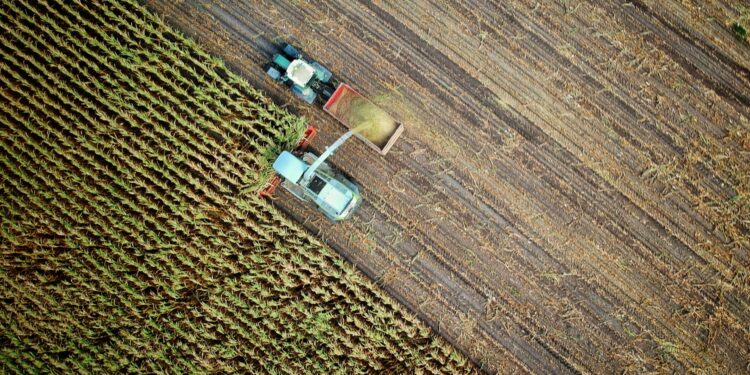
Iowa’s struggling farm economy is becoming a major political issue ahead of the 2026 elections. A new report shows farm income has fallen sharply while production costs continue to climb, fueling debate over whether economic frustrations could make traditionally Republican Iowa more competitive. While Republicans remain confident the state will stay in the GOP column after President Donald Trump carried Iowa by about 13 percentage points in 2024, Democrats believe financial pressure in farm country could create new opportunities in two closely watched statewide races.
Iowa Farm Economy Faces Growing Challenges
A report released by Iowa State University, the Iowa Farm Bureau Federation and the Iowa Bankers Association paints a concerning picture for the state’s agricultural industry.
Researchers found that Iowa’s farm economy has been experiencing a prolonged downturn for three consecutive years, driven by lower commodity prices, rising production expenses and continued economic uncertainty.
Agricultural economist Chad Hart of Iowa State University said the agricultural sector has struggled far longer than many other parts of the U.S. economy.
One of the report’s biggest findings is the sharp decline in farm profitability. According to the study, Iowa’s net farm income fell approximately 53 percent between 2022 and 2024.
At the same time, many corn and soybean producers continue facing a difficult financial reality, with production costs exceeding the prices they receive for many of their crops.
Researchers also found that corn production costs have climbed roughly 37 percent since 2021, while soybean production costs have increased about 36 percent.
Why Iowa Agriculture Matters
Agriculture remains one of Iowa’s most important industries and a major driver of the state’s economy.
According to the report, agriculture and agriculture-related businesses contribute approximately $51.5 billion each year, accounting for nearly 19 percent of Iowa’s gross domestic product.
Experts cautioned that prolonged weakness in farming extends far beyond individual producers. Equipment dealers, grain elevators, rural banks, suppliers, transportation companies and countless small businesses also depend on a healthy agricultural economy.
Researchers also pointed to ongoing uncertainty surrounding trade policy, inflation, labor costs and future federal farm legislation as factors making it increasingly difficult for farmers to plan for the future.
Many producers continue watching export markets closely, particularly as global trade conditions remain uncertain.
Rising Costs Continue To Pressure Farmers
Beyond declining crop prices, Iowa farmers continue dealing with higher operating expenses across nearly every aspect of their businesses.
Fuel, fertilizer, machinery, seed and financing costs have all remained elevated compared to just a few years ago, reducing already thin profit margins.
For many family farms, the combination of higher expenses and weaker commodity prices has created another difficult growing season, leaving producers hoping for stronger markets and greater stability in the months ahead.
Democrats See An Opening
The farm economy has become a major talking point as Democrats attempt to make gains in statewide races during the 2026 election cycle.
State Auditor Rob Sand is running for governor, while Democratic state Representative Josh Turek is seeking an open U.S. Senate seat.
Several recent public polls have shown Sand either leading or running even with Republican candidate Zach Lahn.
The Senate race has also remained highly competitive, with polling showing Republican Representative Ashley Hinson and Turek separated by only a few percentage points.
Prediction markets have reflected similar uncertainty. Some political forecasters currently give Sand better odds in the governor’s race, while Hinson remains only a slight favorite in the Senate contest.
Republicans Still Hold Significant Advantages
Despite competitive polling, Republicans continue entering the election cycle from a position of strength.
President Donald Trump won Iowa comfortably in 2016, expanded his margin in 2020 and again carried the state decisively in 2024.
Republicans also maintain control of the governor’s office, the state legislature and most statewide elected positions, making Iowa one of the GOP’s strongest Midwestern states.
That history has made recent polling especially noteworthy for political observers in both parties.
Competing Visions For Iowa Agriculture
Both Republican and Democratic candidates have placed Iowa farmers at the center of their campaigns while offering different approaches to addressing the state’s agricultural challenges.
Hinson has focused on reducing regulations that she argues place unnecessary burdens on Iowa producers. She has also promoted legislation designed to protect livestock producers from regulations adopted in other states.
Meanwhile, Turek has emphasized rising operating costs, market consolidation and delays in passing a new federal Farm Bill, arguing that many family farmers continue to face growing financial pressure.
Both campaigns have made clear that agriculture will remain one of the defining issues throughout the election season.
Could Rural Voter Turnout Decide The Election?
Political analysts note that Democrats do not necessarily need to win rural Iowa outright to become more competitive statewide.
Instead, even modest declines in Republican turnout or support across rural counties, combined with strong Democratic turnout in larger population centers such as Des Moines, Cedar Rapids and Iowa City, could tighten statewide races.
Some analysts believe economic frustration could affect voter enthusiasm more than party loyalty, although whether that ultimately changes election results remains uncertain.
Trump’s Standing May Play A Role
President Trump has continued emphasizing support for American agriculture through trade policies, immigration enforcement and proposals aimed at strengthening domestic production.
His administration has argued those policies will benefit farmers over the long term, while critics contend that many producers continue facing difficult economic conditions in the short term.
Political analysts say it remains too early to determine how much those concerns will influence Iowa voters next year. Most expect campaign activity to intensify after Labor Day, when advertising increases and voters begin paying closer attention to the races.
Frequently Asked Questions
Why are Iowa farmers struggling?
According to the latest report, many Iowa farmers are dealing with lower commodity prices, higher production costs and continued uncertainty surrounding trade, inflation and federal agricultural policy.
How much has Iowa farm income declined?
Researchers found that Iowa’s net farm income fell by approximately 53 percent between 2022 and 2024.
Is Iowa becoming competitive again?
Recent polling suggests the governor’s and Senate races could be closer than many expected. However, Republicans continue to hold significant advantages after multiple statewide victories in recent election cycles.
Looking Ahead
Whether Iowa’s economic challenges ultimately reshape the state’s political landscape remains an open question. Republicans continue to enjoy a strong electoral advantage, but Democrats believe concerns over farm profitability and rural economic conditions could narrow the gap in key statewide contests.
As the 2026 campaign season accelerates, Iowa’s agricultural economy is expected to remain one of the most closely watched issues for candidates from both parties—and one that could play a significant role in determining the outcome of two of the nation’s most important statewide elections.