
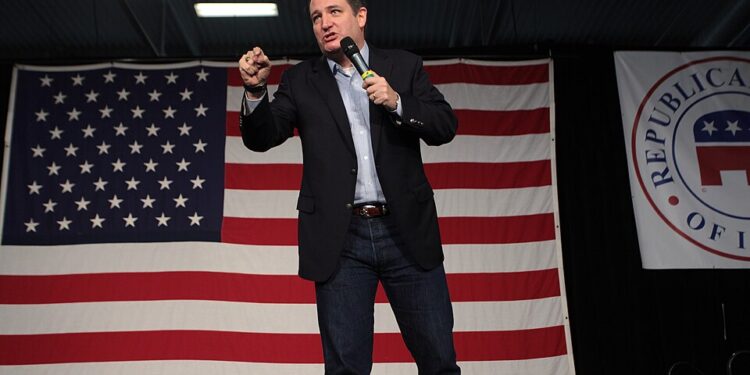
Vice President JD Vance is drawing new attention to the Republican Party’s future after making a striking observation about Texas Sen. Ted Cruz and the 2028 presidential race.
Although the next presidential election is still more than two years away, Vance said he believes Cruz is already positioning himself for another White House campaign.
Vance told NBC News that he believes Ted Cruz is already positioning himself for a presidential run.
Vance quickly added that he is not currently doing the same.
Vance said he is not currently pursuing a presidential campaign and is instead focused on helping Republican candidates win their elections.
The comments are adding fuel to growing speculation about who could eventually compete for the Republican presidential nomination after President Donald Trump leaves office.
Ted Cruz Is Leaving the Door Open
Cruz has not officially announced a 2028 presidential campaign.
However, the Texas Republican has become increasingly willing to discuss the party’s next presidential contest.
Cruz previously sought the Republican presidential nomination in 2016, emerging as one of Trump’s most serious primary rivals before Trump ultimately secured the nomination.
Now, Cruz is again signaling that he expects to have a voice in deciding the future of the GOP.
During an August interview with MS NOW, Cruz rejected the idea that Republicans had already settled on Vance as their next presidential nominee.
“There’s going to be a full discussion about who we are and what we believe,” Cruz said.
When asked whether he intended to participate in that discussion, Cruz replied that he would “certainly be part of the discussion.”
Those remarks stopped short of an official campaign announcement, but they made clear that Cruz is not ruling out another run.
When Texas Lt. Gov. Dan Patrick separately asked Cruz whether he planned to seek the presidency again, Cruz responded, “Time will tell.”
Cruz Raises Questions About the GOP’s Future
Cruz has also begun laying out what he believes could become a major debate inside the Republican Party.
He has described the party’s future as a choice between a traditional “small-government, free-market conservative” approach and a Republican Party willing to embrace a larger government role in certain areas.
That debate could become increasingly significant as Republicans begin considering what the party should look like in the years after Trump.
Economic policy, federal spending, taxes, foreign policy, immigration and the proper size of government could all become major issues in a future GOP presidential primary.
Cruz’s positioning suggests that any 2028 contest could involve more than personalities. It could also become a debate about the direction of the conservative movement itself.
Vance Is Keeping His Options Open
Vance, meanwhile, continues to avoid making a formal commitment about 2028.
The vice president has indicated that his immediate priority is helping Republican candidates ahead of the November midterm elections.
He said major political decisions should be made only after considering as much information as possible.
“You make these decisions by collecting as much information and trying to make a wise decision,” Vance said.
That means Republicans may have to wait until after the midterms before getting a clearer answer about Vance’s presidential ambitions.
For now, he remains one of several prominent Republicans being discussed as a possible 2028 contender.
Cruz Has Been Increasing His National Profile
Cruz’s recent activity has only added to the speculation.
The Texas senator has been making appearances outside his home state, including political activity in Iowa, traditionally one of the most closely watched states during Republican presidential campaigns.
The Wall Street Journal reported in September that Cruz has been increasing his public appearances and discussing the possibility of another presidential campaign, although he has not formally entered the race.
That makes Vance’s comments particularly notable.
Rather than simply saying Cruz might run, the vice president publicly stated that he believes Cruz is already acting like a presidential candidate.
Still, there is an important distinction between preparing for a possible campaign and formally declaring one.
As of now, Cruz has done the former but not the latter.
Midterm Elections Remain the Immediate Test
Before Republicans turn their attention fully toward 2028, the party must first get through the November 3, 2026, midterm elections.
Vance has acknowledged that Republicans face challenges.
He described the political environment as an “uphill climb,” while also saying there is reason for “cautious optimism.”
Historically, the president’s party frequently loses congressional seats during midterm elections, which makes the November results an important political test for both parties.
Trump and Vance have both been campaigning for Republican candidates as Election Day approaches.
The results could also provide potential 2028 candidates with valuable information about which messages are connecting with Republican voters.
What Happens Next?
The Republican Party is still a long way from selecting its next presidential nominee.
No major 2028 Republican candidate has formally secured the nomination, and the political environment could change significantly before campaigning begins in earnest.
But the public exchanges between Vance and Cruz offer an early glimpse at a potentially important battle over the GOP’s future.
Cruz has made clear that he does not believe the party has already settled on Vance.
Vance, in turn, has openly suggested that Cruz is already preparing to run.
For Republican voters, particularly those who have followed conservative politics for decades, the developing contest could eventually raise larger questions about taxes, government spending, economic policy, foreign affairs and the direction of the Republican Party after Trump.
For now, both men say their attention remains focused on the midterm elections.
But with Cruz leaving the door open and Vance publicly acknowledging his possible ambitions, the conversation surrounding the 2028 Republican presidential race has clearly begun.