
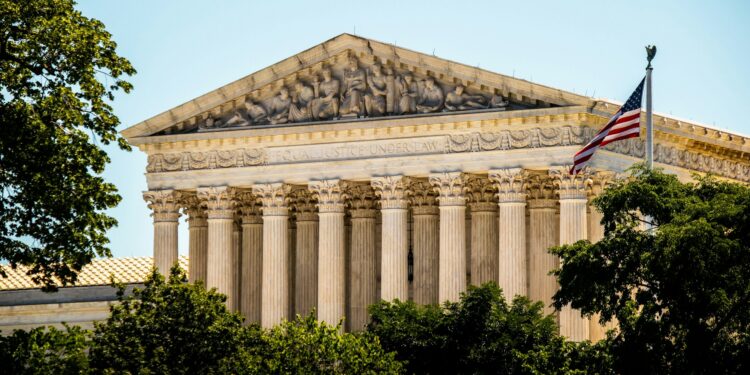
Supreme Court Justice Samuel Alito is addressing growing questions about his future on the nation’s highest court, revealing that he has seriously considered retirement while ultimately deciding to remain on the bench for now.
The comments are likely to draw attention from conservatives, Republicans and court watchers because Alito has been one of the Supreme Court’s most influential conservative voices for more than two decades.
At 76, Alito acknowledged that retirement is now something he must evaluate regularly.
During an interview with CBS News, Alito was asked whether he considered stepping down at the conclusion of the Supreme Court’s previous term amid pressure from some Republicans who wanted to ensure that a conservative successor could be confirmed while the GOP controlled the Senate.
Alito confirmed that the possibility crossed his mind.
“I thought about it,” he said.
The justice explained that someone at his stage of life naturally has to consider the question at the end of each Supreme Court term.
For now, however, Alito believes his work is not finished.
Samuel Alito Says He Can Still Contribute
Alito said he decided to continue serving because he believes he can still make a valuable contribution to the federal judiciary.
That, he indicated, remains one of the central reasons he became a judge in the first place.
His remarks make clear that retirement is not currently imminent, but they also suggest that the issue will continue to be evaluated.
Alito said he will likely have to reconsider his future every year.
That creates an important political question because a Supreme Court retirement can have consequences lasting for generations.
Unlike members of Congress or presidents, Supreme Court justices receive lifetime appointments and can remain in office for decades.
As a result, the timing of a justice’s departure can determine which president gets to nominate a successor and which Senate gets to decide whether that nominee is confirmed.
Why Alito’s Retirement Would Matter to Trump and Republicans
For President Donald Trump and Senate Republicans, any future vacancy involving Alito could become one of the most consequential confirmation battles in Washington.
Alito is a key member of the Supreme Court’s conservative majority and has participated in major rulings involving constitutional rights, presidential authority, religious freedom, abortion, federal regulation and other issues important to conservative voters.
A vacancy during Trump’s presidency could potentially give the president another opportunity to shape the Supreme Court for decades.
Trump already transformed the court during his first term by appointing Justices Neil Gorsuch, Brett Kavanaugh and Amy Coney Barrett.
Those appointments helped establish the court’s current conservative majority.
If Alito eventually retired while Trump remained in the White House and Republicans controlled the Senate, Trump could nominate another conservative justice to replace him.
That possibility explains why Alito’s retirement plans have become such an important issue among Republican voters and political leaders.
Alito Addresses Comparison to Ruth Bader Ginsburg
CBS News also questioned Alito about whether waiting too long to retire could ultimately put his judicial legacy at risk.
The question drew a comparison to the late liberal Justice Ruth Bader Ginsburg.
Ginsburg remained on the Supreme Court until her death in September 2020 at age 87.
Her death created a vacancy shortly before the presidential election, allowing Trump to nominate Amy Coney Barrett.
Barrett was confirmed by the Republican-controlled Senate in October 2020.
That confirmation strengthened the Supreme Court’s conservative majority and had enormous consequences for the direction of federal law.
Because of that history, political strategists on both sides now pay close attention to the ages and retirement plans of Supreme Court justices.
Alito, however, suggested that attempting to perfectly time a retirement around future elections is far more complicated than it might appear.
Alito Says Politics Are Difficult to Predict
Alito explained that no justice can know exactly what his personal circumstances will look like several years into the future.
Health, family considerations and other factors can change unexpectedly.
The political environment can be equally unpredictable.
Control of the White House can change. Senate majorities can disappear. Election results can surprise political analysts, and presidents can make unexpected choices about judicial nominees.
For those reasons, Alito suggested it would be difficult to make a retirement decision based entirely on assumptions about what Washington might look like one or two years later.
His comments indicate that he is considering both his ability to continue serving and the uncertainty surrounding future political conditions.
Alito Has Served on Supreme Court for More Than 20 Years
Samuel Alito has been a member of the Supreme Court since 2006.
President George W. Bush nominated him to replace retiring Justice Sandra Day O’Connor.
The Senate confirmed Alito by a vote of 58-42.
Since joining the court, he has become one of its most recognizable conservative members.
Alito is currently the second-oldest justice on the Supreme Court.
Justice Clarence Thomas, who is 78, is the oldest member.
The court’s conservative wing also includes Chief Justice John Roberts and Justices Thomas, Gorsuch, Kavanaugh and Barrett.
Its liberal wing consists of Justices Sonia Sotomayor, Elena Kagan and Ketanji Brown Jackson.
That 6-3 ideological balance has played a major role in many of the court’s most closely watched decisions.
Previous Alito Retirement Rumors Proved Wrong
Speculation about Alito’s retirement has circulated repeatedly.
Earlier this year, rumors intensified that the justice could be preparing to leave the court.
Alito pushed back against that speculation in August.
Speaking to The Wall Street Journal, he made clear that he expected to remain on the Supreme Court for another term.
“Obviously I’m here for another term,” Alito said.
That appeared to settle the question temporarily.
However, his latest admission that he did consider retirement shows that discussions about his future were not entirely unfounded.
NPR Incorrectly Reported Alito Was Retiring
The uncertainty surrounding Alito’s future also led to a major media mistake earlier in the year.
NPR incorrectly reported that Alito had announced his retirement on the final opinion day of the Supreme Court’s term.
That report quickly attracted national attention because an Alito vacancy would immediately have triggered intense political debate.
The report was wrong.
NPR later retracted the story, and veteran Supreme Court journalist Nina Totenberg apologized to Alito in a letter.
The incident demonstrated just how significant the possibility of an Alito retirement has become in Washington.
Even an incorrect report was enough to generate immediate political speculation.
Conservatives Have Major Stakes in Alito’s Decision
For conservative Americans, especially older voters who have watched the Supreme Court change dramatically over several decades, Alito’s eventual decision could have long-term consequences.
The Supreme Court regularly considers cases involving issues such as religious liberty, gun rights, immigration enforcement, abortion laws, government regulation, election disputes, free speech and presidential power.
Many of those cases are decided by narrow margins.
Replacing a single justice can therefore change the outcome of major constitutional disputes.
That reality has made Supreme Court nominations one of the most important issues in modern presidential elections.
Trump repeatedly emphasized judicial appointments during his first presidential campaign, promising voters that he would nominate constitutional conservatives.
His three Supreme Court appointments became one of the most significant achievements of his first administration.
Could Trump Get Another Supreme Court Pick?
Alito has not announced any retirement plans.
But his admission that he considered leaving the court raises an unavoidable question: Could Donald Trump eventually receive another opportunity to appoint a Supreme Court justice?
The answer depends entirely on when — or whether — Alito chooses to retire.
If a vacancy emerged while Trump occupied the White House, the president would have the constitutional authority to nominate a replacement.
The Senate would then decide whether to confirm that nominee.
For Republicans, maintaining control of the Senate would therefore be especially important if a Supreme Court vacancy became possible.
Judicial nominations require Senate approval, meaning control of the chamber can determine whether a president successfully places a nominee on the court.
That gives upcoming elections even greater significance for voters focused on the future of the judiciary.
What Happens Next?
For now, Samuel Alito remains firmly on the Supreme Court.
He has given no indication that an announcement is imminent, and his previous comments suggest he intends to continue serving through the current term.
At the same time, his acknowledgment that retirement is now an annual consideration guarantees that speculation will continue.
Every new Supreme Court term could bring renewed questions about his plans.
For conservatives, the issue is particularly important because Alito has played a central role in building and maintaining the court’s current conservative majority.
His eventual successor could influence American law for 20, 30 or even 40 years.
That makes the timing of Alito’s eventual departure far more than a personal career decision.
It could become one of the most important political developments of Donald Trump’s presidency.
For now, however, Alito’s message appears clear: retirement has been considered, but he still believes he has more work to do on the Supreme Court.