
President Donald Trump’s administration is considering an unusual land exchange involving Yosemite National Park and a private real estate developer, setting off a new debate over development, private property and the future of America’s protected public lands.
The proposal involves Kingsbarn Realty Capital, a Nevada-based real estate investment and development company connected to property located just outside Yosemite.
If the deal ultimately moves forward, the developer could obtain an interest in a strip of land inside the national park that would make it possible to build a much shorter access road connecting its property to a major route through Yosemite.
But there is an important distinction: President Trump has not simply handed Yosemite land to a private company.
No final agreement has been approved, according to the National Park Service, and any exchange would have to go through federal procedures before becoming reality.
Still, the proposal is attracting scrutiny because of what it could mean for one of America’s most famous national parks.
What Is Happening at Yosemite?
The controversy centers on privately owned property near Yosemite that was purchased in 2024 by a limited-liability company controlled by Kingsbarn Realty Capital.
The property encompasses approximately 83 acres outside the park.
According to reporting by NOTUS, the developer wants improved access between the property and Yosemite. The proposed arrangement could involve exchanging an interest in a strip of federal land for other California property determined to have equivalent value.
The National Park Service has reportedly been examining the proposal while officials at the Department of the Interior have taken an interest in moving the process forward.
That has generated criticism from some former park officials, lawmakers and conservation advocates.
The Interior Department, however, disputes allegations that officials are improperly pressuring the Park Service to produce a predetermined result.
Why Does the Developer Want Yosemite Access?
Location is at the heart of the dispute.
The privately owned property sits near Yosemite, but reaching the park through existing roads requires a considerably longer drive.
A new connection could dramatically improve access from the property to Yosemite’s road network.
That could also increase the attractiveness and potential value of future development on the privately owned acreage.
The Los Angeles Times reported that an attorney representing Kingsbarn said the company intends to develop upscale single-family homes on its property.
The attorney argued that creating a shorter route into Yosemite could actually provide environmental benefits by substantially reducing the amount of driving residents would need to reach the park.
Critics see the matter very differently.
They question why federal park property should potentially be exchanged in a transaction that could benefit a private development.
Interior Department Pushes Back
The controversy became more complicated after the Interior Department publicly disputed allegations surrounding the proposal.
The department acknowledged that a potential transaction is being evaluated but rejected claims that political officials are secretly attempting to force the Park Service to hand Yosemite property to a developer.
Interior officials said there has been no improper political pressure to guarantee a particular outcome.
They also emphasized that no final decision has been made.
That response is significant because some of the most explosive allegations surrounding the story come from anonymous sources describing internal discussions within the National Park Service.
For Americans trying to determine exactly what is happening, the distinction matters.
There is a proposed transaction under consideration. There are allegations of unusual political pressure from people familiar with the process. And the Interior Department denies that improper pressure is being applied.
The Proposal Has a Long History
The fight over access to this property did not begin with Trump.
Previous owners spent years attempting to secure improved access through Yosemite.
Earlier efforts encountered resistance from the National Park Service and eventually became the subject of litigation.
That history makes the current proposal particularly noteworthy.
According to NOTUS, previous attempts involving the property were rejected repeatedly over more than two decades.
Kingsbarn acquired the land in 2024 and subsequently renewed efforts to establish improved access.
The Trump administration’s willingness to consider a land exchange therefore represents a potentially significant change in how the federal government is approaching the longstanding dispute.
Doug Burgum Faces Questions
Interior Secretary Doug Burgum is also finding himself at the center of the story.
During his 2025 confirmation hearing, Burgum emphasized the importance of protecting America’s national parks.
Now, critics argue that allowing a private developer to acquire an interest in Yosemite property would conflict with that commitment.
The administration can counter that considering a legally authorized land exchange is not the same thing as abandoning national park protection.
Under the proposal, the federal government would be expected to receive other property of equivalent value.
That raises another important question:
How do you determine the value of land inside Yosemite National Park?
An acre of ordinary California property and an acre associated with one of America’s most famous national parks may have dramatically different strategic, commercial and cultural significance.
That could become one of the most contentious parts of the debate.
Yosemite Is Part of America’s Heritage
For millions of Americans, Yosemite is more than a tourist attraction.
The park represents a piece of the nation’s natural heritage.
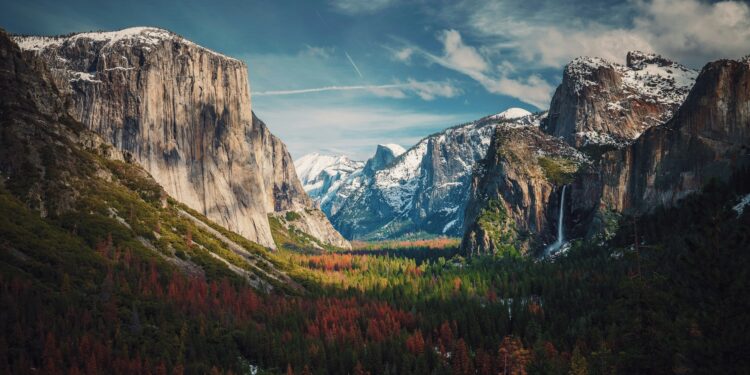
Its towering granite formations, waterfalls, forests and giant sequoias have attracted generations of American families.
The origins of federal protection at Yosemite stretch back to President Abraham Lincoln, who signed legislation protecting Yosemite Valley and the Mariposa Grove during the Civil War.
That history helps explain why even a relatively small proposed land transaction can generate a major political fight.
Many conservatives strongly support private property rights and responsible economic development. At the same time, conserving America’s most important landscapes for future generations has deep roots in the country’s political tradition.
Those principles now intersect in the Yosemite controversy.
Could Taxpayers Benefit From the Exchange?
Supporters of federal land exchanges argue that swaps can sometimes improve management of public lands.
The government routinely deals with complicated property boundaries, privately owned parcels and access issues throughout the West.
An exchange can potentially make sense if taxpayers receive property that provides equal or greater public value.
But that makes transparency essential.
Americans will likely want to know exactly what Yosemite property would be exchanged, what the developer would receive, what property taxpayers would receive in return and how government officials determined that the two sides represented a fair trade.
Those details could ultimately determine whether the proposal looks like reasonable land management or preferential treatment for a private developer.
California Democrats Move Against the Proposal
The controversy has also reached Capitol Hill.
California Democratic Sens. Alex Padilla and Adam Schiff have voiced opposition to the potential transaction.
Their involvement guarantees that the issue will have a political dimension as the administration considers its options.
But opposition from Democrats does not automatically answer the underlying policy question.
The administration will still have to demonstrate whether the transaction serves taxpayers and complies with federal law.
For conservative voters, that may be the most important test.
If private development benefits from federal action, taxpayers should be able to see clearly what the federal government — and therefore the American public — receives in return.
Is Trump Giving Away Yosemite?
Not at this point.
Despite the dramatic controversy, there has been no completed transfer of Yosemite National Park land to Kingsbarn Realty Capital.
The National Park Service says no final decision has been reached.
If the proposal advances, officials say it would be subject to applicable federal laws, environmental review, public notification requirements and other established procedures.
The Interior Department has also rejected accusations that officials are attempting to predetermine the outcome.
Those facts are important because the dispute remains an ongoing government process rather than a completed transaction.
What Could Happen Next?
Several major questions remain unanswered.
Federal officials would need to determine precisely what interest in Yosemite land could be exchanged, identify appropriate replacement property and establish whether the properties have equivalent value.
The proposal could also encounter political opposition and potentially legal challenges if approved.
That means the Yosemite controversy may be far from over.
For Trump supporters, conservationists, property-rights advocates and taxpayers alike, the most important issue may ultimately be transparency.
Americans deserve to know exactly what private developers would receive, what taxpayers would receive in return and whether the arrangement protects the long-term interests of Yosemite National Park.
For now, Trump has not given Yosemite National Park to a private developer.
But his administration is considering an unusual land exchange involving a portion of one of America’s most treasured national parks — and the details of that proposal are likely to face intense scrutiny before anything becomes final.