
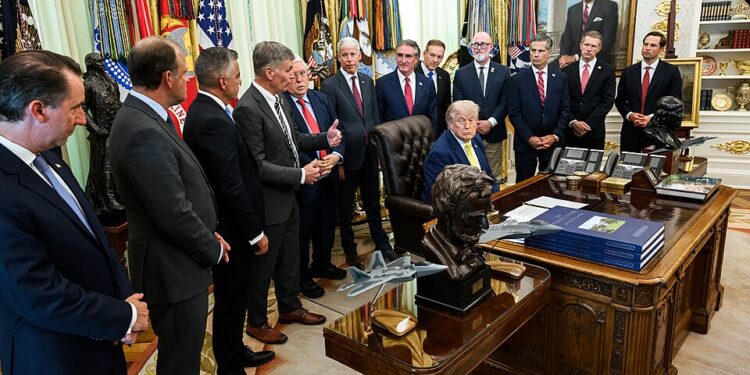
President Donald Trump has announced a major new energy agreement with Russia that he believes could help lower diesel fuel prices across the United States, potentially bringing relief to American farmers, truck drivers, small businesses, and families struggling with higher everyday expenses.
The agreement follows a conversation between Trump and Russian President Vladimir Putin, with Russia reportedly agreeing to supply millions of tons of diesel fuel to American and international markets.
According to Fox Business, Trump described his conversation with Putin as highly successful and predicted that diesel prices would soon decline substantially.
The announcement comes at a critical moment for the American economy, as rising energy prices continue to affect transportation costs, grocery bills, agricultural operations, and businesses nationwide.
However, whether the agreement will actually produce significant savings remains uncertain.
Trump Announces Major Agreement With Russia
On October 9, Trump announced that Russia had agreed to release substantial quantities of diesel fuel into the American and global marketplace.
According to the president, the agreement includes an immediate supply of more than 300,000 tons of diesel fuel, followed by another 500,000 tons in November.
Russia is also expected to provide another 1 million tons shortly afterward.
Trump indicated that an additional 3 million tons could become available within a relatively short period, depending on the condition and production capacity of Russian refineries.
If all the announced supplies become available, the agreement could represent a significant international energy transaction.
The president expressed confidence that increasing available diesel supplies would help ease pressure on fuel markets and reduce costs for American consumers.
According to Reuters, the announcement followed direct discussions between Trump and Putin about increasing diesel availability.
The agreement represents a notable change in American energy policy toward Russia, particularly as sanctions connected to the war in Ukraine have restricted Russian fuel sales.
Why Trump’s Diesel Deal Matters to American Families
While most Americans closely follow regular gasoline prices, diesel fuel plays an essential role in determining the cost of everyday necessities.
Diesel powers commercial trucks, farm equipment, construction machinery, and other vehicles responsible for keeping the American economy moving.
When diesel prices increase, transportation companies often face higher operating expenses.
Those additional costs can eventually affect the prices consumers pay for groceries, household supplies, building materials, and other products.
American farmers face similar challenges.
Diesel is essential for operating tractors, harvesting crops, transporting agricultural products, and maintaining food production.
Higher fuel costs can make farming significantly more expensive, particularly for smaller agricultural operations working with limited profit margins.
For retirees and Americans living on fixed incomes, higher grocery and household expenses can be especially difficult to manage.
That is one reason the possibility of lower diesel prices has attracted considerable attention.
If Trump’s agreement helps reduce fuel costs, the benefits could eventually extend beyond diesel vehicle owners to consumers throughout the country.
Diesel Prices Have Put Pressure on American Businesses
The president’s announcement comes as American trucking companies and other diesel-dependent businesses face substantial financial pressure.
According to Fox Business, the national average price of diesel reached approximately $6.26 per gallon in September.
Such high prices can create serious financial difficulties for companies that transport products across the United States.
Several trucking and freight businesses reportedly filed for bankruptcy during September as diesel costs continued rising.
For independent truck drivers, fuel is one of the largest ongoing operating expenses.
When diesel prices climb, drivers must spend more money simply to complete their usual deliveries.
Larger transportation companies may be able to absorb some of those expenses, but smaller businesses often have fewer financial resources available.
Those challenges can contribute to increased shipping rates, reduced profitability, and higher costs throughout the supply chain.
The rising cost of diesel has also become an important political and economic concern as the country approaches November’s midterm elections.
Trump Takes Additional Steps to Address Rising Fuel Costs
The Russian diesel agreement is part of a broader effort by the Trump administration to respond to rising energy prices.
The president recently signed an executive order temporarily expanding access to red-dyed diesel fuel for highway use without the usual tax penalties.
Red-dyed diesel is generally reserved for qualifying off-road purposes, including farming, construction, and industrial equipment.
The temporary policy change is intended to provide additional flexibility during a period of unusually high fuel costs.
Combined with the newly announced Russian agreement, the administration hopes these measures will increase fuel availability and ease pressure on businesses and consumers.
Trump has repeatedly identified lower energy costs as an important objective, particularly for America’s agricultural and transportation industries.
For farmers and truck drivers facing increasingly expensive operating conditions, any meaningful reduction in fuel expenses could provide welcome financial relief.
Will Diesel Prices Actually Come Down?
Although Trump expects the agreement to produce lower prices, energy experts caution that the actual economic impact may be limited.
Diesel prices are influenced by multiple factors, including global oil production, refinery capacity, international conflicts, transportation costs, and overall fuel demand.
Additional diesel supplies can help reduce pressure on markets, but the arrival of more fuel does not automatically guarantee immediate savings for American consumers.
The Associated Press reported that energy experts believe the Russian agreement may have only a modest effect on diesel prices because of broader global supply constraints.
Some analysts also question whether the additional Russian fuel will meaningfully increase worldwide supplies or simply redirect fuel that would otherwise be sold elsewhere.
The agreement has also generated criticism over concerns that increased Russian energy revenue could benefit Moscow during its ongoing war in Ukraine.
Ukrainian President Volodymyr Zelenskyy has criticized the arrangement, arguing that easing restrictions on Russian energy could strengthen Russia financially.
These concerns highlight the difficult balance between pursuing lower energy prices and maintaining international pressure on Moscow.
For American consumers, the most immediate question remains whether the administration’s strategy will translate into measurable savings.
What Lower Diesel Prices Could Mean for the Economy
If diesel prices begin declining, several important sectors of the American economy could benefit.
Lower fuel expenses could make it less costly for trucking companies to transport goods between warehouses, distribution centers, and retail stores.
Farmers could see reduced costs for agricultural equipment and transporting crops.
Construction companies and manufacturers might also experience some relief from transportation and equipment expenses.
Over time, lower operating costs could help reduce pressure on the prices consumers pay for certain goods.
However, businesses do not necessarily pass every cost reduction directly to customers, and any savings would depend on market conditions.
Still, affordable diesel remains an important component of a stable economy.
For millions of American households already managing higher living expenses, sustained reductions in energy and transportation costs could provide meaningful financial relief.
What Happens Next?
Trump’s agreement with Russia now faces an important test: whether the promised fuel supplies become available and help bring down diesel prices.
The coming weeks will show whether Russian deliveries proceed as announced and whether wholesale and retail diesel markets respond.
Consumers will also be watching how broader developments involving Iran, Ukraine, and international energy supplies influence fuel prices.
For American farmers, truck drivers, small-business owners, and families watching their budgets, the outcome could have important financial consequences.
The president has made clear that reducing diesel costs is among his administration’s priorities.
While experts disagree about how much the agreement will help, Trump’s latest energy deal has placed the rising cost of diesel back in the national spotlight.
For now, Americans will be watching to see whether the president’s promised relief becomes a reality at the pump.