
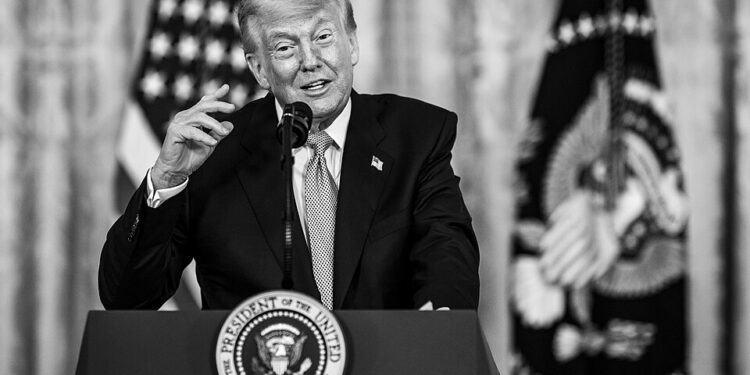
President Donald Trump is preparing to hit the campaign trail ahead of the 2026 midterm elections, putting himself at the center of the Republican Party’s fight to maintain control of Congress.
But Trump’s expanding campaign role presents a complicated decision for Republicans running in competitive House and Senate races.
The president can energize loyal Republican voters who might otherwise stay home during a midterm election. At the same time, recent polling shows significant dissatisfaction among voters over the economy, household costs and other major issues.
That leaves vulnerable Republicans trying to determine how closely they should campaign alongside Trump as Election Day approaches.
Trump Heads to North Carolina for Major Senate Race
Trump is scheduled to travel to Gastonia, North Carolina, on Wednesday, September 16, to campaign for Republican Senate nominee Michael Whatley.
Whatley is running against former Democratic Gov. Roy Cooper for the Senate seat being vacated by Republican Sen. Thom Tillis.
The North Carolina contest is among a relatively small group of competitive Senate races that could help determine which party controls the chamber after November.
Trump’s appearance with Whatley could be the beginning of a broader campaign push as Republicans attempt to motivate their voters nationwide.
The president has urged supporters to treat the midterm elections as though he were personally on the ballot, arguing that losing Republican control of Congress would make it significantly harder to advance his administration’s agenda.
Trump’s Poll Numbers Complicate GOP Strategy
Republicans enter the final stretch of the campaign with another challenge: Trump’s approval ratings have declined in several recent surveys.
A Focaldata survey conducted for the Financial Times found Trump’s approval at 33 percent among registered voters, the lowest recorded by that polling series during his current term.
The same survey found considerable concern about the economy and personal finances, with 57 percent of registered voters saying they felt financially worse off under Trump.
For millions of Americans, especially seniors living on fixed incomes and families managing monthly budgets, issues such as groceries, gasoline, utilities, health care and taxes can have an immediate impact on household finances.
Those concerns are likely to remain central as Republicans and Democrats compete for control of Washington.
Trump Still Has Something Republicans Need
Low national approval numbers do not tell the entire story.
Trump retains substantial influence within the Republican Party, and GOP campaigns have a strong incentive to ensure his most committed supporters participate in an election where the president himself is not on the ballot.
Midterm elections frequently produce different turnout patterns than presidential elections.
That makes Trump’s ability to generate enthusiasm potentially valuable for Republican candidates, particularly in states and congressional districts where turning out the GOP base could make the difference.
The challenge is finding a strategy that motivates those voters without alienating independents and other persuadable Americans.
Some Vulnerable Republicans Are Embracing Trump
Several House Republicans facing competitive reelection campaigns attended the party’s midterm convention in Dallas.
They included Reps. Mike Lawler of New York, Scott Perry of Pennsylvania, Monica De La Cruz of Texas, Derrick Van Orden of Wisconsin, Ryan Mackenzie of Pennsylvania and Rob Bresnahan of Pennsylvania.
Competitive Senate candidates also attended, including Texas Attorney General Ken Paxton, Ohio Sen. Jon Husted, former Michigan Rep. Mike Rogers and Whatley.
Their participation shows that many GOP candidates continue to see political value in appearing with Trump and highlighting his administration’s record.
Republicans hope the president can help recreate some of the enthusiasm that powered his presidential campaigns and translate it into votes for congressional candidates.
Other Republicans Take a Different Approach
Not every Republican in a competitive race attended the Dallas gathering.
Reps. Tom Barrett of Michigan and Brian Fitzpatrick of Pennsylvania were absent, as were Sens. Susan Collins of Maine and Dan Sullivan of Alaska.
An absence from a national convention does not necessarily indicate opposition to Trump. Candidates have different schedules and campaign strategies, and the political environment varies significantly from one state or district to another.
But those differences illustrate why Republicans are unlikely to use exactly the same campaign formula everywhere.
A strategy that works in a heavily Republican district might not work in a suburban swing district where independents could decide the election.
Mike Lawler Shows the Challenge
New York Rep. Mike Lawler offers a particularly clear example of the balancing act facing Republicans.
Lawler has occasionally disagreed with the Trump administration, including over aspects of the conflict with Iran, while continuing to appear publicly with the president.
Trump traveled to Lawler’s district earlier this year for a campaign-style appearance, and Lawler subsequently participated in the Republican convention.
For Republicans representing politically divided districts, that approach allows them to emphasize areas of agreement with Trump while maintaining some independence on individual issues.
Whether voters accept that distinction will become clearer in November.
Economy and Cost of Living Could Decide Voters
Republican strategists also want candidates to spend more time discussing the administration’s domestic policies rather than allowing every congressional contest to become a referendum on Trump’s personality.
Taxes, overtime income, tipped wages, benefits for families, retirement security and the overall cost of living could all become important issues during the final weeks of campaigning.
These questions may be particularly important to voters over 50, including retirees and Americans approaching retirement who are watching inflation, energy costs, health care expenses, Social Security and their household savings.
Republicans are expected to argue that their tax and economic policies have helped working families and that Democratic control of Congress could threaten Trump’s agenda.
Democrats, meanwhile, are making the opposite case, focusing heavily on affordability and arguing that voters should hold Republicans accountable for economic conditions.
That competing economic message could become one of the defining battles of the 2026 midterms.
JD Vance Could Become a Key Campaign Surrogate
Vice President JD Vance is also expected to campaign extensively for Republican candidates.
Vance could be particularly useful across Midwestern states, giving GOP campaigns another nationally recognized figure capable of speaking to Trump’s political coalition.
Using both Trump and Vance would allow Republicans to tailor campaign appearances to individual races rather than relying on the president everywhere.
Trump could concentrate on areas where Republican campaigns believe his presence will maximize turnout, while Vance and other party leaders could headline events elsewhere.
Control of Congress Is on the Line
The stakes extend well beyond individual candidates.
All 435 House seats are on the ballot in November, along with 35 Senate seats. Democrats need a net gain of four Republican-held Senate seats to take control of that chamber.
History also presents a challenge for the party occupying the White House, which has frequently lost congressional seats during midterm elections.
Trump’s strategy is designed to overcome that problem by convincing his presidential-election supporters that the congressional races are just as important.
Republicans argue that keeping control of Congress is necessary to continue implementing the president’s agenda. Democrats see the midterms as an opportunity to place a check on the administration and change the direction of federal policy.
Trump’s Midterm Gamble
Trump’s campaign push ultimately represents both an opportunity and a risk for Republican candidates.
His ability to motivate Republican voters remains a significant political asset. But dissatisfaction among some voters over prices, the economy and foreign policy gives Democrats an opening in competitive races.
For vulnerable Republicans, there may be no universal answer.
Some candidates will enthusiastically campaign with Trump. Others may focus more heavily on their individual records and local concerns.
Either way, Democrats are certain to connect Republican candidates to the president and his administration.
That means the central question may not be whether Republicans can distance themselves from Trump.
It may be whether Trump’s involvement can bring enough supporters to the polls to help Republicans maintain control of Congress when Americans vote on November 3.