
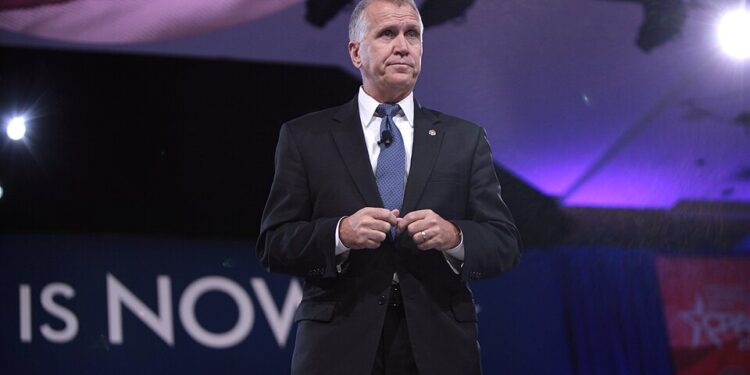
A surprising move from within Republican ranks is raising eyebrows in Washington, as Sen. Thom Tillis (R-NC) draws a firm line that could complicate President Donald Trump’s next major appointment.
But is this a genuine showdown—or just political positioning?
Tillis Draws a Line on Trump’s Next Attorney General
Sen. Tillis made headlines after signaling he will not support any attorney general nominee who, in his view, downplays the events of January 6.
That stance immediately puts him at odds with many in President Trump’s orbit, especially as the administration continues working to reshape the Department of Justice after years of what supporters call partisan “lawfare.”
Tillis stated plainly that he cannot back a nominee who “equivocates” on the Capitol events—setting up what could become a high-stakes confirmation battle.
Trump Still Holds Strong Control Over DOJ Direction
Despite the media framing this as a major Republican divide, the reality is more nuanced.
After former Attorney General Pam Bondi’s departure earlier this month, acting Attorney General Todd Blanche has stepped in—and the White House is making it clear they’re fully behind him.
Administration officials describe Blanche as a loyal and battle-tested figure who stood firm against what many conservatives see as politically motivated attacks on President Trump.
The message from the White House is simple:
Law and order remain the priority.
Why Tillis Actually Matters Here
With Republicans holding only a razor-thin Senate majority, Tillis has real leverage.
As a member of the powerful Judiciary Committee, his vote could be decisive in confirming—or blocking—Trump’s eventual nominee.
And this isn’t the first time he’s pushed back.
Tillis previously blocked a Federal Reserve nomination tied to concerns about a Justice Department investigation into Fed Chair Jerome Powell—arguing it threatened institutional credibility.
That investigation has now been closed, but it showed Tillis is willing to step out of line when he believes it’s necessary.
January 6 Still Divides Washington—But Voters See It Differently
While Democrats continue to focus heavily on January 6, many conservatives have shifted their attention to what they see as double standards and political weaponization of the issue.
The Trump administration has emphasized:
- Security failures at the Capitol
- Questions surrounding leadership decisions at the time
- And what supporters call overreach in prosecutions
President Trump has also taken bold action by issuing pardons and commutations, arguing he is correcting injustices against Americans caught up in what he describes as a politically driven crackdown.
A Rare Break From the GOP—But Not a Party Collapse
Let’s be clear: moments like this are still rare within the Republican Party.
And there’s an important detail—Tillis is not seeking reelection.
That gives him more freedom to speak independently, something we’ve seen from other outgoing lawmakers as well.
Even so, Tillis did not support impeachment after January 6, instead pointing to what he viewed as failures in leadership response rather than supporting Democrat-led charges.
What Comes Next Could Be Huge
President Trump has not yet announced his official nominee—but when he does, expect a major political showdown.
Key questions moving forward:
- Will Republicans stay unified behind Trump’s pick?
- Will moderates like Tillis hold their ground?
- And how will this impact the 2026 election landscape?
One thing is certain—this fight is far from over.
Bottom Line
This isn’t just about one senator or one nomination.
It’s about:
- The future direction of the Justice Department
- The balance of power inside the GOP
- And whether Washington insiders can slow down Trump’s agenda
For millions of Americans watching closely, the outcome could have lasting consequences heading into the next election cycle.